 how-to
7 Towing Services in Metro DC Facts You Need Before You Call
Last Updated: October 25, 2026
Quick Summary
Towing services in Metro DC cover emergency towing, flatbed transport, jump starts, tire changes, lockouts, fuel delivery, and heavy-duty recovery across the DC metro area. They cannot release a vehicle the city has already impounded, and no reputable operator quotes a firm price before seeing where your car is sitting.
- Real 24/7 service means a live dispatcher, an assigned truck, and an arrival window before you hang up.
- Towing bills are built from a hook-up fee, per-mile rate, vehicle class, recovery difficulty, time surcharges, add-ons, and storage.
- Ask for the base fee, per-mile rate, surcharges, drop-off address, and storage rate in writing before authorizing the hook-up.
- All-wheel-drive, low-clearance, and damaged vehicles belong on a flatbed, not a wheel-lift truck.
- Identify who authorized the tow first, since private-property and city-ordered tows have different recovery paths.
Table of Contents
- What towing services in Metro DC actually cover (and what they don't)
- 24/7 towing and roadside assistance: what to expect at 2 AM
- Towing cost and fees: what drives the bill up or down
- Flatbed towing: when your car needs a deck, not a hook
- Roadside assistance near me: jump starts, tire changes and lockouts
- Private-property towing versus city-ordered towing in the DC metro area
- How to choose and book a licensed towing operator, step by step
- Call Carlito's Towing Services for your next tow
- Frequently Asked Questions
What towing services in Metro DC actually cover (and what they don't)
Towing services in Metro DC cover far more than hooking a car to a truck and driving away.
Most drivers learn this distinction at the worst possible moment. They call a tow truck expecting a rescue and discover they actually need a city impound lot.
Below, we break down what a tow really involves, what drives the bill, and how to book the right operator the first time.
24/7 towing and roadside assistance: what to expect at 2 AM
A 2 AM breakdown tests a towing company's actual operation, not its marketing. Real 24/7 service means a live dispatcher answers, a truck is assigned, and you get an estimated arrival time before you hang up. It does not mean a voicemail box and a callback at 7 AM.
Realistic response times and how dispatch works
Response time depends on where you are and what else is happening in the metro area. A disabled vehicle on a main road in Silver Spring at 2 AM usually draws a faster response than one deep inside a parking garage in a dense downtown block.
If you want to know what a late-night call actually looks like from the customer's side, our guide on emergency towing services near me walks through the full process.
Towing cost and fees: what drives the bill up or down
Towing cost and fees depend on distance, vehicle type, time of day, and how difficult the recovery is. A straightforward hook-up on a clear road costs less than a winch-out from a muddy shoulder or a low-clearance garage extraction. We do not publish flat rates because no honest operator can price a tow before knowing where the vehicle sits. What we can do is show you how a tow bill is actually built, so you can read an estimate instead of guessing at it.
The line items that make up a tow bill
Most metro-area tow bills are assembled from a small set of charges. Ask the dispatcher to walk through each one before you agree:
- Hook-up or base fee. Covers sending the truck and attaching the vehicle. This is the floor of the bill and is usually quoted first.
- Per-mile rate. Applies after a included-mileage allowance, which varies by operator. Confirm whether the allowance is measured from the pickup point or from the operator's yard.
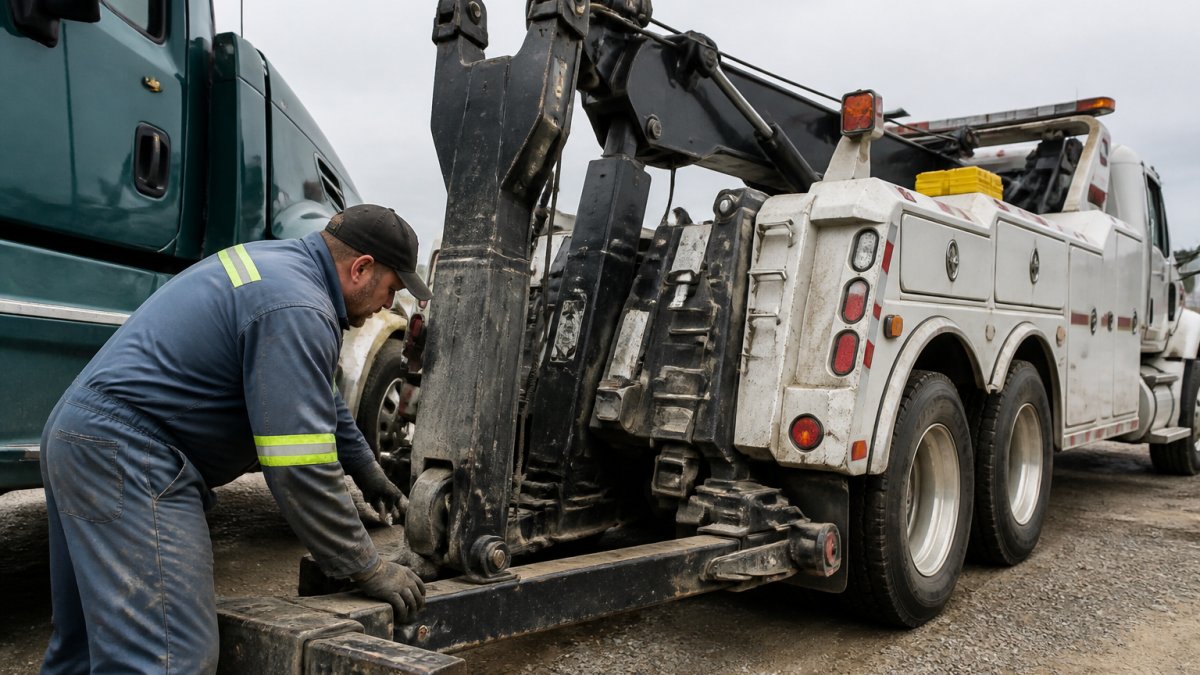
- Vehicle classification. Light-duty cars, medium-duty trucks, and heavy-duty commercial vehicles are priced on different scales. A loaded box truck is not a sedan with a bigger bill.
How to request a written estimate
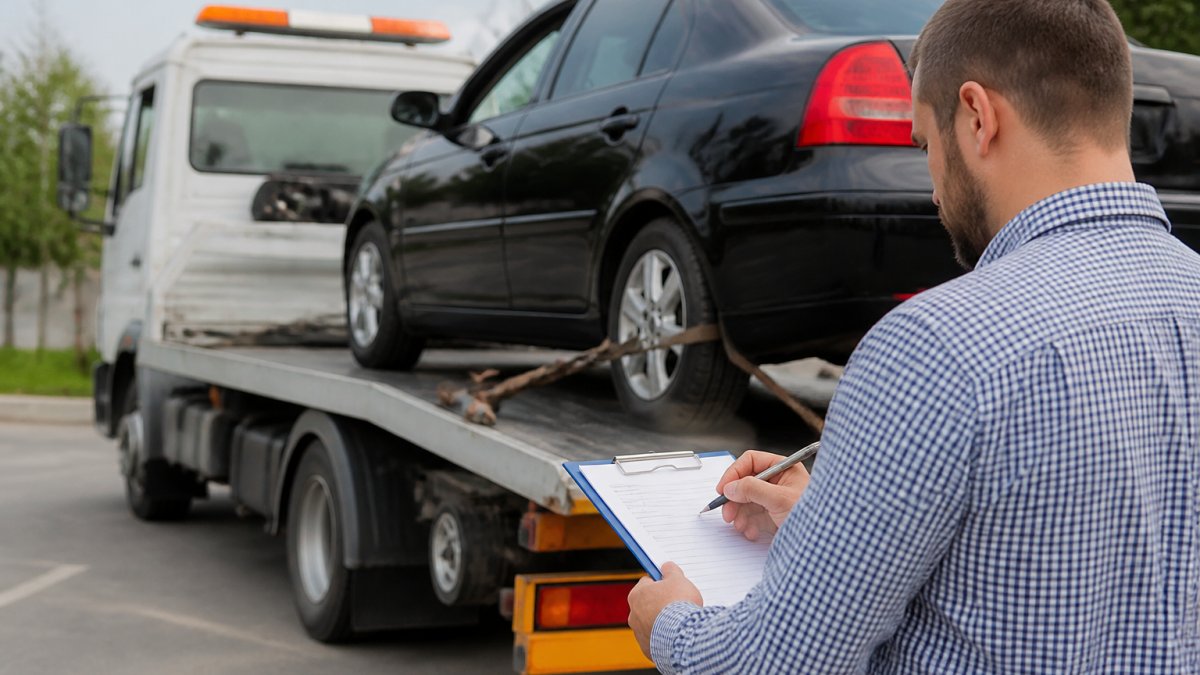
You can ask for an estimate in writing or by text before authorizing the hook-up. A useful request sounds like this: "Please text me the base fee, the per-mile rate and included miles, any after-hours surcharge, the drop-off address, and the storage rate if the vehicle is not delivered today." An operator who cannot or will not put those numbers in writing is telling you something.
Keep the text. If the final bill differs from the written estimate, you have a record of what you were told.
What consumer-protection rules generally require
Towing is regulated at the state level, and the rules differ across the metro area. In general, regulated operators are expected to post their rates, provide a written receipt or itemized bill on request, and follow rules about where a vehicle may be taken and how it is released. Some jurisdictions also cap certain fees or require notice before a vehicle is moved from private property.
Red flags in a tow estimate
- A firm all-in price quoted before anyone asks where the vehicle is located.
- A per-mile rate with no stated included mileage.
- A destination that is not confirmed in writing.
None of these automatically means a bad operator, but each one is a question worth asking before you hand over the keys.
Most metro-area tow bills are built from the same small set of charges, so ask the dispatcher to walk through each one before you agree.
| Line item | What it covers | What to confirm |
|---|---|---|
| Hook-up or base fee | Sending the truck and attaching the vehicle | Usually quoted first; it is the floor of the bill |
| Per-mile rate | Mileage after an included-mileage allowance | Whether allowance runs from pickup point or operator's yard |
| Vehicle classification | Light-duty cars, medium-duty trucks, heavy-duty commercial vehicles | Each class is priced on a different scale |
| Recovery difficulty | Winch-outs, off-road extraction, low-clearance garage pulls | Adds labor and time to the bill |
| Time and conditions | Overnight, weekend, holiday, storm-response calls | Whether the surcharge is a flat add-on or a multiplier |
| Add-on services | Jump start, tire change, fuel delivery, lockout | Whether billed separately or bundled with the tow |
| Storage | Holding the vehicle if it cannot be delivered immediately | When storage starts and the daily rate |
Flatbed towing: when your car needs a deck, not a hook
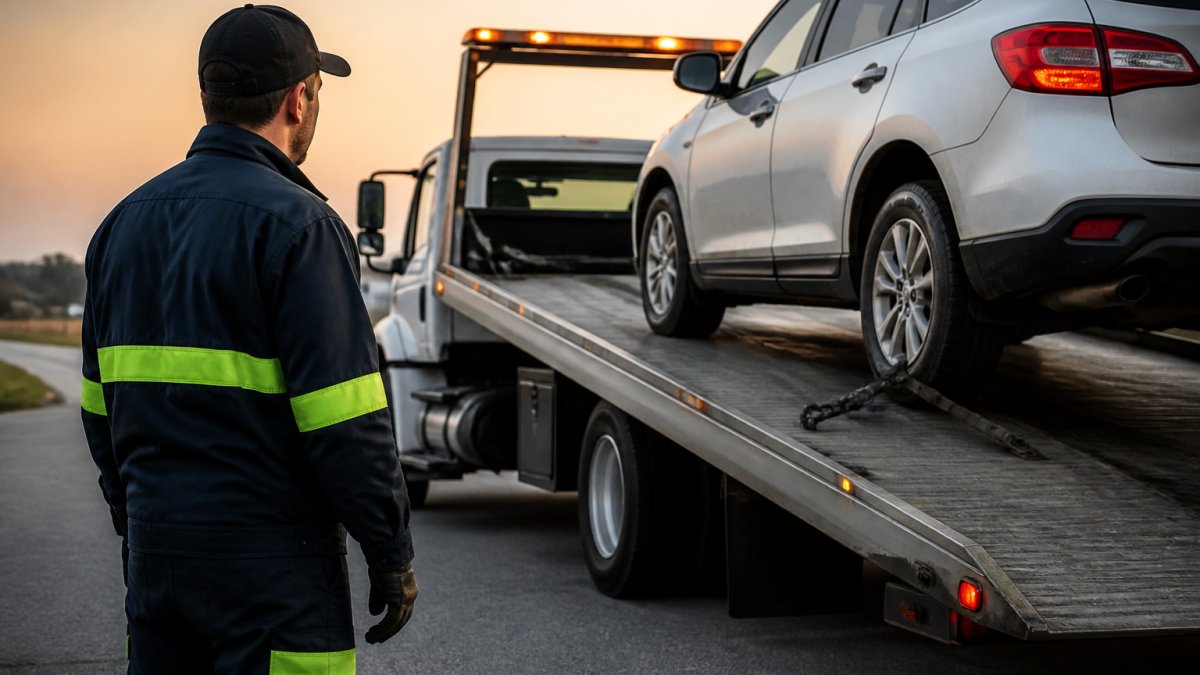
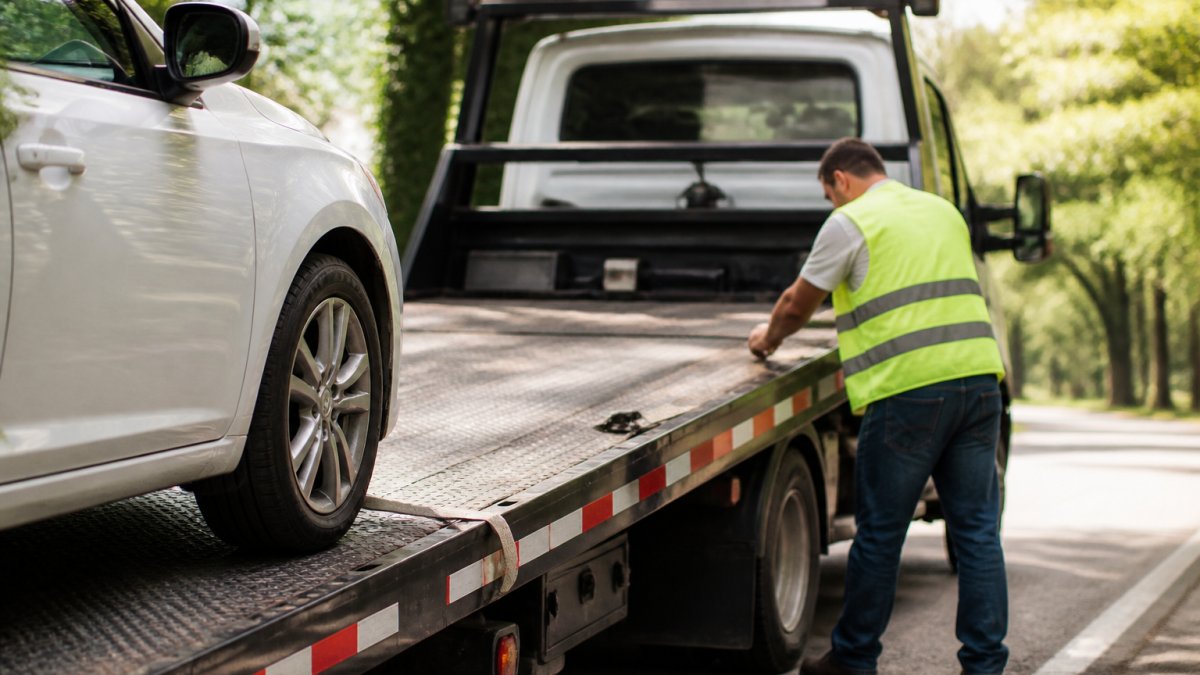
Flatbed towing is the right call whenever a vehicle should not roll on its own wheels. All-wheel-drive and four-wheel-drive vehicles, low-clearance sports cars, vehicles with damaged suspension or steering, and newer models with sensitive drivetrains all belong on a flat deck.
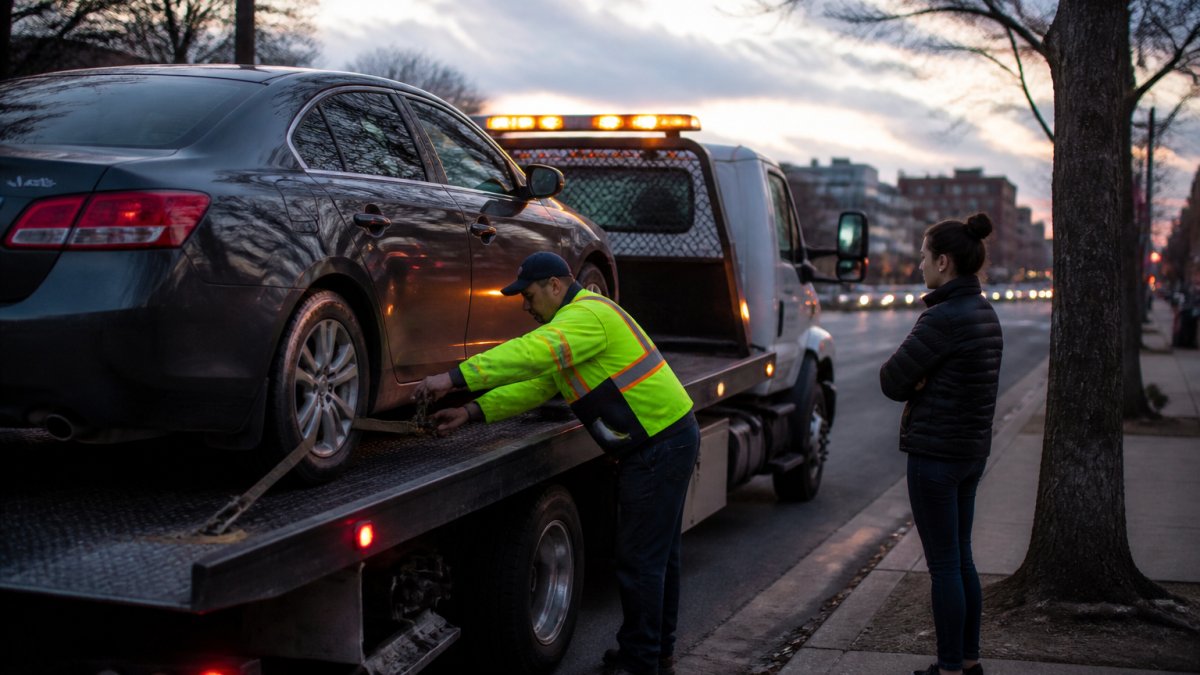
If you drive something expensive or unusual, say so when you call. That single detail decides whether the dispatcher sends a flatbed or a standard truck.
Roadside assistance near me: jump starts, tire changes and lockouts
Roadside assistance near me usually means one of three problems: a dead battery, a flat tire, or keys locked inside. All three are fixable on the spot, and none of them require a tow if the vehicle is otherwise sound.
- Jump starts get you moving when a battery has drained, though a battery that keeps dying needs testing, not repeated jumps.
- Tire changes swap your flat for the spare so you can reach a shop. If the spare is missing or also flat, a tow is the safer route.
- Lockouts open the door without damage, which is why you should never let a passerby pry at the frame.
Watch out: a jump start on a modern vehicle with sensitive electronics should follow the manufacturer's procedure, not a guess. Tell the operator your make and model so they use the right method.
Private-property towing versus city-ordered towing in the DC metro area
Private-property towing and city-ordered towing are two different systems, and mixing them up wastes hours. The fastest way to get a vehicle back is to identify which system took it, because the recovery path, the paperwork, and the people you call are different in each case.
Who authorized the tow, and how to tell
The first question is not "where is my car" but "who ordered it moved." There are three common answers:
- A private property owner or manager. A lot owner, landlord, or property manager authorized removal from private land, usually under a posted sign or a lease term. The vehicle goes to the operator who took it, not to a government lot.
- A public agency. Parking enforcement or police ordered the removal from a public street, typically for a parking violation, a blocked right-of-way, or after a crash. The vehicle goes to a government-contracted impound lot.
- A private operator at the scene of a crash or breakdown. You or your insurer requested the tow, and the vehicle goes wherever you directed it.
If the car vanished from a private lot, start with the sign at the lot entrance and the property manager's office. If it vanished from a public street, start with the local parking enforcement agency. Calling random tow operators first is the slowest path.
Where the vehicle goes, and who can release it
A privately towed vehicle sits with the operator who took it. That operator releases it, and the release usually requires payment of the posted tow and storage charges plus proof that you are the owner or an authorized party. A city-ordered tow sends the vehicle to an impound lot, and release runs through the agency that ordered the tow or its contracted lot.
The first hour after your car disappears
- Check the signs and the lot. Note the towing company name and phone number posted on private-property signage.
- Call the property manager if the vehicle was in a private lot. Ask who authorized the tow and which operator was used.
- Call the local parking enforcement agency if the vehicle was on a public street. Ask whether it was towed and to which lot.
- Call the operator or lot with your license plate and vehicle description. Confirm location, release requirements, and the amount owed.
- Document everything. Photograph the signage, keep your receipts, and note the names of anyone you speak with.
How jurisdiction changes the answer across the metro area
The metro area spans multiple jurisdictions, and each one sets its own towing rules. The practical differences show up in three places: which agency regulates private-property towing, what signage and notice a property owner must provide before a vehicle is moved, and which lot a city-ordered tow goes to.
Because the rules and the responsible agencies differ by jurisdiction, verify the current requirements with the state or local agency that regulates towing where the vehicle was picked up. Ask the operator which agency licenses them and which lot they use for that jurisdiction.
Property managers: keep the authorization clean
Property managers should keep a clear tow authorization process on file, naming who can request a removal and under what conditions. A written authorization, a current signage check, and a named point of contact reduce the chance that a vehicle is moved without proper notice, which is the most common source of complaints in private-property towing.
How to choose and book a licensed towing operator, step by step
Choosing a licensed operator comes down to five checks you can run in under ten minutes. Every state in the metro area regulates towing.
- Confirm licensing. Ask for the operator's license or registration number and the name of the agency that issued it.
- Ask for the total estimate and the destination. Get both before the hook-up, not after.
- Match the truck to the vehicle. Flatbed for all-wheel drive, low clearance, or damage; standard truck for a simple move.
- Confirm the response window. A real dispatcher gives you a time range and a callback number.
- Check the service area. Confirm the operator covers your pickup and drop-off points before you commit. You can review the service area and location to confirm coverage before calling.
Call Carlito's Towing Services for your next tow
Breakdowns do not schedule themselves, and the difference between a smooth recovery and a four-hour ordeal usually comes down to who you call. Carlito's Towing Services runs 24/7 roadside assistance across the DC metro area, including Silver Spring, Beltsville, Laurel, and Rockville.
Get started with Carlito's Towing Services and get back on the road with a dispatcher who answers, an honest estimate, and a truck that fits your vehicle.
Frequently Asked Questions
How much does towing cost in DC?
Towing cost and fees depend on distance, vehicle type, time of day, and whether you need a flatbed or heavy-duty truck. A short local hook-up usually costs less than a long-distance transport or an after-hours recovery. Ask the dispatcher for the base rate, per-mile charge, and any after-hours or winching fees before you agree. Carlito's Towing Services quotes pricing based on your specific situation, so call or check the website for a current estimate rather than relying on a generic number.
What should I ask a towing company before booking?
Ask four things: the total estimated price including any per-mile and after-hours fees, the estimated arrival time, whether the driver is a licensed operator, and where the vehicle will be taken. Also confirm what equipment will be used, especially if your car is all-wheel drive or low-clearance and needs flatbed towing. Get the dispatch center's phone number so you can follow up. A reputable provider answers these plainly and puts the tow destination in writing.
Do you actually operate 24/7, or only certain days?
Carlito's Towing Services runs 24/7 towing and roadside assistance, including overnight and weekend calls. That matters because breakdowns do not keep business hours; a dead battery at 2 AM or a flat tire on a dark shoulder needs a live dispatcher, not a voicemail. When you call, confirm the estimated arrival time and give your exact location, including the nearest cross street or parking garage level, so the driver finds you fast.
Can you tow a car out of a tight parking garage?
Yes, tight spaces are a common request in the DC metro area, where many garages have low clearance and narrow ramps. Tell the dispatcher the garage address, the ceiling height, and which level you are on when you request assistance.