 ultimate-guide
Heavy Duty Towing for Fleets: What Managers Need to Know
Last Updated: October 26, 2026
Quick Summary
Heavy duty towing for fleets is a procurement and planning decision, not an emergency purchase. Fleets that build a written breakdown response plan, vet providers on equipment and 24/7 dispatch, and fix rates in writing pay less and wait less. Treat it as a plan, not a panic call.
- Heavy duty covers vehicles exceeding light-duty wrecker limits, including semi-trucks, buses, and construction equipment.
- Post one dispatch number in every cab so drivers never search at the roadside.
- Confirm in writing that a provider can dispatch multiple trucks at once for fleet work.
- Contracted rate structures are the most predictable billing model for fleet budgeting.
- Track response time, time to scene, and cost per event monthly against the agreement.
Table of Contents
- Why Heavy Duty Towing for Fleets Needs a Plan, Not a Panic Call
- What Vehicles and Equipment Count as Heavy Duty
- Building a Fleet Breakdown Response Plan
- Your Towing Provider Checklist Before You Sign
- What Drives Heavy-Duty Towing Cost for a Fleet
- 24/7 Fleet Roadside Assistance: What Real Coverage Looks Like
- Setting Up a Fleet Towing Account with Carlito's Towing Services
- Frequently Asked Questions
Why Heavy Duty Towing for Fleets Needs a Plan, Not a Panic Call
A heavy-duty breakdown never happens at a convenient hour.
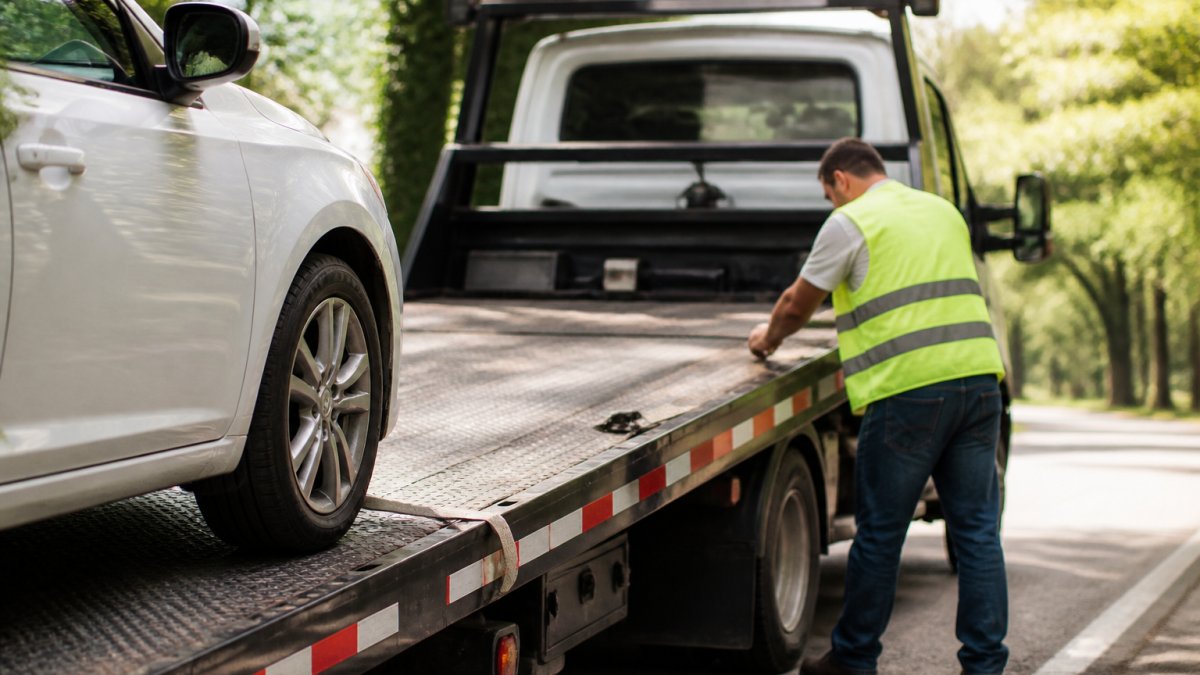
Heavy duty towing for fleets is a procurement and planning decision, not an emergency purchase. Fleets that treat it as the latter pay more, wait longer, and absorb more downtime.
Most guides get one thing wrong: they treat towing as a single service. A 26-foot box truck and a loaded tractor-trailer require different equipment, operators, and recovery methods.
What Vehicles and Equipment Count as Heavy Duty
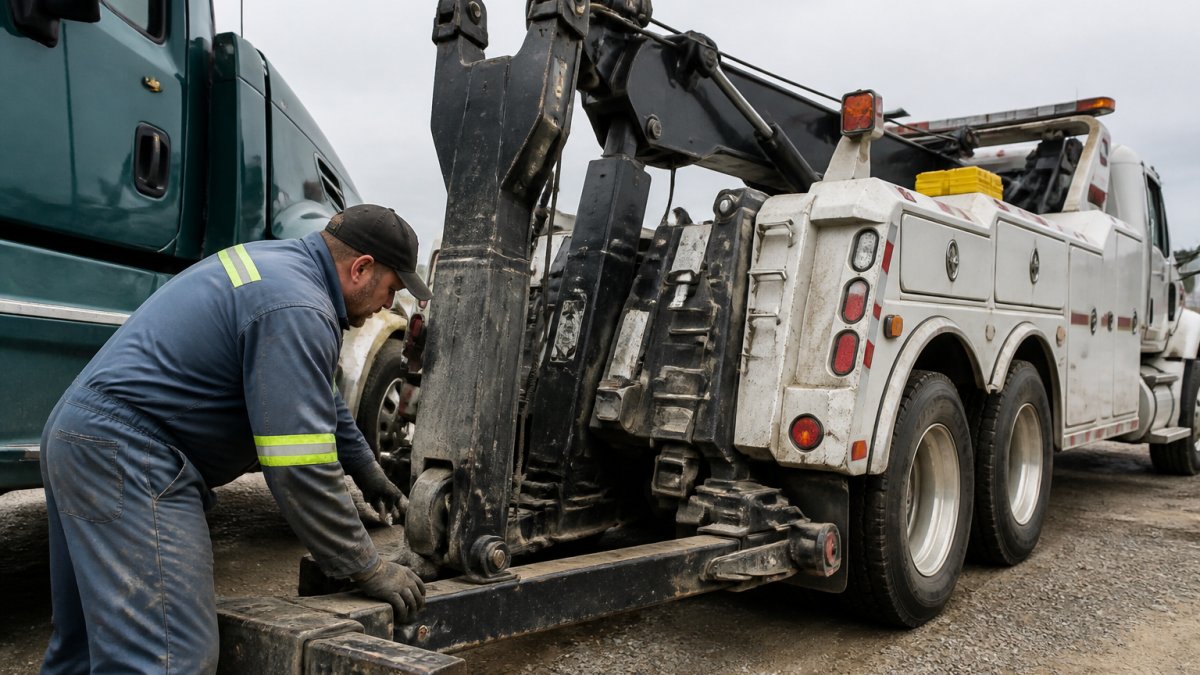
Heavy duty covers any vehicle or load that exceeds the weight and size limits of standard light-duty wreckers, including commercial vehicles, heavy equipment, and anything requiring specialized towing equipment. The dividing line determines which providers can even respond: a standard tow truck cannot legally or safely lift a loaded semi. Dispatch needs to know what you operate before an incident, not during one.
Commercial Trucks, Trailers, and Heavy Equipment
Fleet managers typically deal with a mix of the following:
- Semi-trucks and tractor-trailers: the most common heavy recovery call, requiring a heavy-duty wrecker or rotator for loaded units
- Commercial trucks: box trucks, dump trucks, and straight trucks above light-duty thresholds
- Buses and motorhomes: long wheelbases and high centers of gravity demand specialized handling
Don't assume your provider handles all of these. Many handle semi-truck towing but not construction equipment transport. Confirm coverage category by category.
Building a Fleet Breakdown Response Plan
A fleet breakdown response plan is a written procedure telling every driver and dispatcher who to call, what to document, and how to secure the scene before a tow truck arrives. Here's the practical structure we recommend:
- One dispatch number, posted everywhere. Cab card, phone case, and dispatch screen. No driver should search for a number at the roadside.
- Scene safety protocol. Hazmat placards, triangles, and lighting requirements spelled out by vehicle class.
- Vehicle identification sheet. Unit number, plate, weight class, and load status so dispatch can send the right equipment first time.
The plan should live in the cab, not in a binder at the terminal. Drivers who can't find the number call whoever answers first, and that's how fleets end up with a truck in a lot they didn't choose.
Your Towing Provider Checklist Before You Sign
Choosing a towing provider comes down to verifying capability, availability, and accountability before you need any of them.
| What to Verify | Why It Matters | Red Flag |
|---|---|---|
| Equipment inventory | Confirms they can lift your heaviest unit | Vague answers about "heavy-duty capability" |
| 24/7 dispatch staffing | Night and weekend breakdowns are the norm | Voicemail after hours |
| Response time commitment | Downtime has a direct cost | No stated target |
| Insurance and liability limits | Protects you if cargo or property is damaged | Refuses to provide certificates |
| Billing model | Prevents invoice surprises | No written rate structure |
| Service area coverage | Confirms they reach your routes | "We go anywhere" with no detail |
Two questions separate serious providers from the rest. First: can you handle multiple simultaneous tows? Second: how do you handle tight spaces like parking garages and loading docks?
The 7 towing services in Metro DC facts you need before you call breaks down the service types worth confirming before you commit to any provider.
What Drives Heavy-Duty Towing Cost for a Fleet
Heavy-duty towing cost is driven by weight, distance, equipment class, recovery difficulty, and time of day, not a flat rate. Any provider quoting one number over the phone is guessing. For a fleet, the goal is a predictable cost per event you can budget against and audit.
The variables that move the invoice:
- Vehicle weight and class. A loaded tractor-trailer requires heavier equipment than an empty box truck. Gross vehicle weight and axle configuration determine whether a medium-duty wrecker, heavy-duty wrecker, or rotator is dispatched, each at a different rate.
- Recovery complexity. A unit in a ditch, a jackknifed trailer, or a vehicle in a tight garage takes longer and more equipment. Winching, load transfer, and cleanup are typically separate line items.
- Distance. Towing to a nearby yard costs less than a long haul to a preferred repair facility. Per-mile charges usually apply after a base hook fee and a set included mileage.
Billing Models and What to Ask Up Front
Fleet accounts generally run on one of three models: hourly, per-mile plus a hook fee, or a contracted rate structure. Each has trade-offs.
- Hourly billing rewards speed on simple recoveries but punishes complex ones, because the clock runs while equipment is staged. It is hardest to forecast.
- Per-mile plus hook fee is predictable for straightforward transport but ignores recovery difficulty, so a simple transport and a ditch extraction can look similar until add-ons appear.
- Contracted rate structure is the most predictable for budgeting. It fixes the hook fee, per-mile rate, hourly recovery rate, after-hours multiplier, and storage rate in writing, usually in exchange for volume commitment or a minimum spend.
Ask every provider for the following in writing before signing: the hook or dispatch fee, the per-mile rate and included mileage, the hourly recovery rate, after-hours and holiday multipliers, storage fees and when they start, winching and load-transfer rates, and what triggers each charge.
Payment Terms, Billing, and Cost Control
Cost control is where fleet accounts separate from one-off calls. A written agreement should specify invoice delivery, documentation for each charge, and the payment window. Fleet-friendly terms include consolidated monthly invoicing, a purchase order or unit number on every dispatch, and itemized invoices showing base fee, mileage, time on scene, and each add-on.
Three controls keep towing spend from drifting:
- Pre-authorization limits. Set a dollar threshold above which dispatch must call a fleet contact before additional work, winching, a second truck, or a long haul, is authorized.
- Unit-level coding. Require the unit number and driver name on every invoice so charges can be matched to a vehicle and a trip, which makes repeat-problem units visible.
- Invoice audit. Compare each invoice against the contracted rate sheet. The most common overcharges are mileage beyond the included allowance, after-hours multipliers applied to daytime calls, and storage days that overlap with a repair already in progress.
Review towing invoices monthly against the rate agreement and flag any charge that doesn't map to a line on the sheet. That habit catches most billing drift before it compounds.
The 7 towing services in Metro DC facts you need before you call breaks down the service types worth confirming before you commit to any provider.
24/7 Fleet Roadside Assistance: What Real Coverage Looks Like
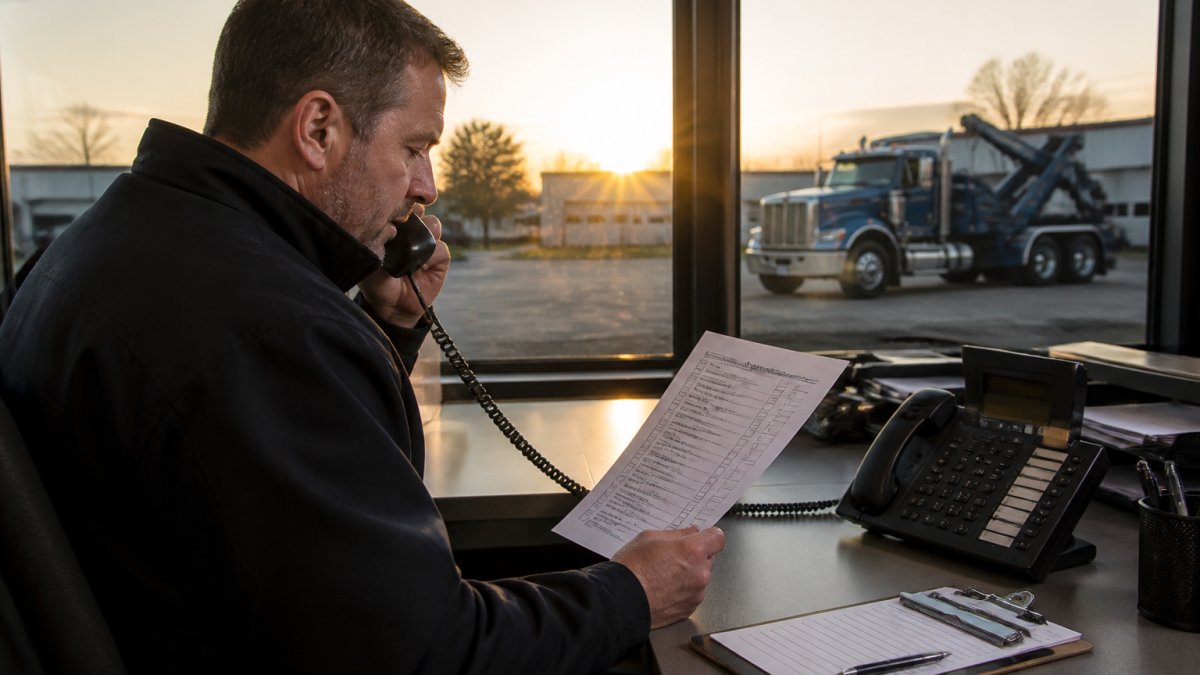
Real 24/7 fleet roadside assistance means a staffed dispatcher answers at 2 a.m. and a truck rolls, not a call-back service that opens at seven. The difference matters most when your vehicle blocks a dock or sits in a live lane, where a delayed dispatch turns a repair into a lost load.
Coverage should extend beyond towing. Practical fleet programs include jump starts, tire changes, fuel delivery, lockout service, and mobile assistance for minor issues. Handling those on site avoids a full tow and gets the unit back on the road faster. Confirm in writing which are included and which are billed separately.
What a Service-Level Commitment Should Spell Out
Availability is the piece fleets get burned on. Ask directly: are you staffed every night, weekend, and holiday? Put the answer in the account agreement as a service-level commitment covering:
- Answer standard. The maximum time before a live dispatcher picks up, stated in minutes, for business hours and after hours separately.
- Dispatch and arrival targets. The committed time from call to truck dispatch, and from dispatch to on-scene arrival, by zone or route corridor if your fleet runs fixed lanes.
- Equipment commitment. Which truck classes the provider guarantees to have available for your vehicle weights, and what happens if a rotator is already committed elsewhere.
Measuring Whether the Coverage Is Real
A 24/7 promise is only as good as the data behind it. Track these metrics per event and review them monthly with the provider:
- Response time: call received to truck dispatched.
- Time to scene: dispatch to arrival.
- Time to recovery: arrival to the unit being hooked and moving.
A provider that won't report these numbers is asking you to take the 24/7 claim on faith. The fleets that get reliable service review the numbers and hold the provider to the agreement.
If you want to know what a realistic emergency response looks like from dispatch to hook-up, the guide on emergency towing services near me walks through the sequence.
Setting Up a Fleet Towing Account with Carlito's Towing Services
A fleet account converts a panicked phone call into a routine dispatch.
We start with your fleet profile: vehicle classes, weight ranges, typical routes, and the units most likely to need heavy recovery.
The advantage of an account is simple. To get started, our location and contact details are the fastest way to reach the team and open an account.
The challenge for most fleet managers isn't finding a tow truck.
Frequently Asked Questions
What vehicles require heavy duty towing?
Heavy duty towing covers vehicles and equipment that exceed the weight and size limits of standard wreckers. That includes semi-trucks, tractor-trailers, dump trucks, buses, motorhomes, large commercial vehicles, construction equipment, and loaded trailers. If a vehicle's weight or wheelbase is beyond what a light-duty tow truck can safely handle, it needs a heavy-duty tow truck with specialized towing equipment. Fleet managers should confirm weight ratings with their provider before an incident, not during one.
How does heavy duty towing work for commercial fleets?
For a commercial fleet, heavy duty towing works best as a pre-arranged service rather than a one-off emergency call. A fleet account sets up dispatch contacts, vehicle profiles, and billing terms in advance. When a vehicle breaks down, the driver or dispatcher calls a dedicated line, the provider matches the right heavy-duty tow truck to the vehicle weight and location, and the tow is documented for insurance and reporting. This shortens response time and keeps costs predictable.
What should a fleet manager look for in a heavy duty towing provider?
Use a towing provider checklist: 24/7 availability, heavy-duty tow trucks sized for your heaviest vehicle, a defined service area, response time commitments, insurance and liability coverage, itemized billing, and a dispatch process that works with your fleet's reporting. Ask how they handle multiple simultaneous tows and whether they provide account management. A provider that cannot answer these before an incident will struggle during one.
What information should a driver provide when requesting a heavy duty tow?
The driver should give the exact location, vehicle type and approximate weight, whether it is loaded or empty, the nature of the breakdown, and any access issues such as a tight lot or low clearance. Fleet drivers should also provide the account number and a callback number. Clear information lets dispatch send the correct heavy-duty tow truck on the first call, which reduces response time and avoids a second trip.
How can fleets prepare for a heavy duty towing emergency?
Build a fleet breakdown response plan before you need it. List account contacts, vehicle profiles, and approved tow providers. Train drivers on what to say when they call and where to wait safely. Keep registration and insurance details accessible. Review incidents monthly to spot repeat failures. A written plan turns a roadside breakdown into a routine dispatch instead of a scramble.
What affects the cost of heavy duty towing for a fleet?
Heavy-duty towing cost depends on vehicle weight and size, distance towed, time of day, recovery difficulty, and whether specialized equipment is needed. Account holders often get itemized billing and negotiated rates. Because pricing varies by job, ask your provider for a written quote or rate sheet rather than estimating. Carlito's Towing Services can confirm current pricing for your fleet's vehicles and service area.