 how-to
Emergency Towing Services Near Me: What to Expect in 2026
Last Updated: October 24, 2026
Quick Summary
Emergency towing starts with getting yourself safe: pull onto the shoulder, turn on your hazard lights, and stand behind the guardrail before you call. When you phone a provider, have your exact location, vehicle details, the problem, and whether anyone is hurt ready so dispatch can send the right truck.
- Give the dispatcher a landmark, exit number, or mile marker instead of just a street address.
- Ask for a best-case and worst-case ETA range rather than trusting a single arrival number.
- Request flat tire roadside assistance first when the tire is the only problem, since it is usually faster than a tow.
- Confirm the price and destination before the truck rolls, and never agree to a tow without both.
- Walk around the vehicle with the driver and photograph all four sides before loading.
Table of Contents
- Emergency Towing Services Near Me: What to Do First
- What to Say When Calling a Towing Company
- Tow Truck Response Time: What Affects Your Wait
- Flat Tire Roadside Assistance and Other Roadside Help
- Emergency Towing Cost: What Drives the Bill
- How to Verify a Tow Provider and Avoid Scams
- What Happens During Pickup, Towing, and Vehicle Handoff
- Conclusion
- Frequently Asked Questions
Emergency Towing Services Near Me: What to Do First
When your car dies on the shoulder of I-495 at rush hour, the search for emergency towing services near me becomes the only thing that matters. This guide from Carlito's Towing Services walks you through exactly what to do, what to say, and how to avoid getting overcharged when you need a tow truck fast.
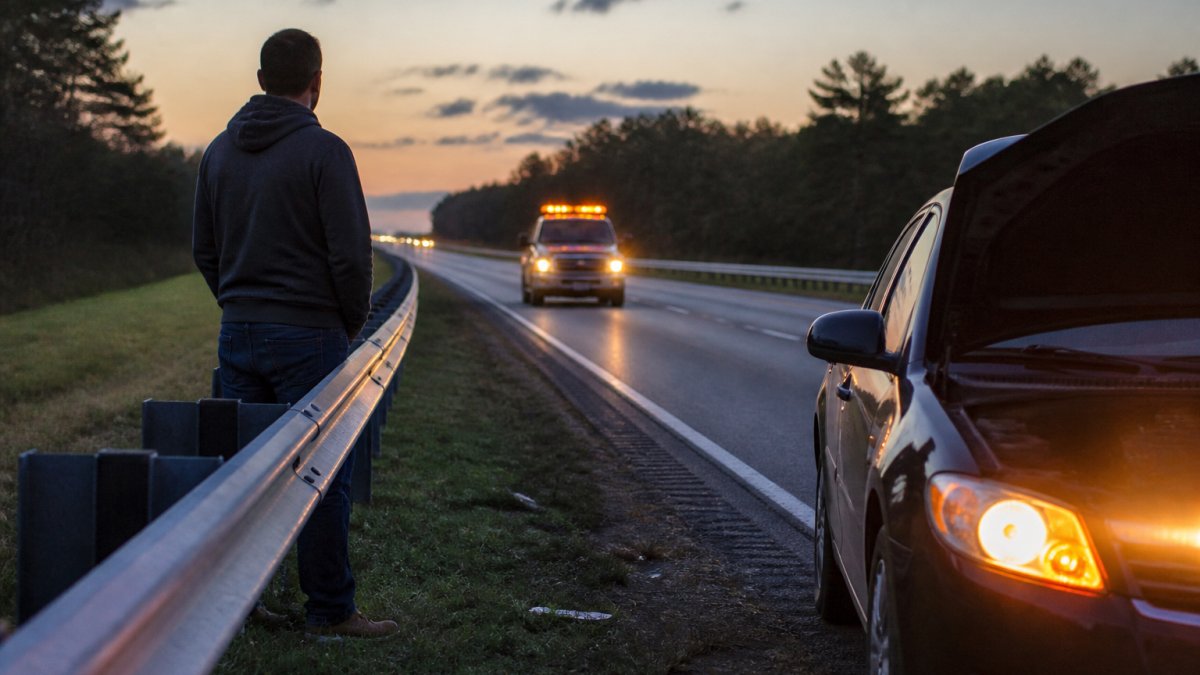
The first move is always the same: get yourself safe before you worry about the vehicle.
- Pull as far onto the shoulder as you can and turn on your hazard lights.
- If you're on a highway, exit on the passenger side and stand behind the guardrail, never between your car and traffic.
- Call for help from a safe spot, and give the dispatcher your exact location using highway markers or the nearest exit number.
A common mistake is standing next to the car while waiting. Traffic on a busy highway leaves almost no margin, and most towing-related injuries happen before the truck even arrives. Get clear of the lane first, then make the call.
What to Say When Calling a Towing Company
The call goes faster when you have four facts ready: your location, your vehicle, the problem, and whether anyone is hurt. Dispatch uses each one to decide which truck to send and how long it will take.
Here's what to have in hand before you dial:
- Location: highway name, direction, nearest exit, and any mile marker.
- Vehicle: make, model, year, and whether it's all-wheel drive or lowered.
- Problem: dead battery, flat tire, engine failure, accident, or lockout.
- Access: whether the car is in a garage, tight lot, or on a narrow street.
Tell the dispatcher if you're in a parking garage or other tight space. Some trucks can't fit into low-clearance garages, and knowing this up front saves you a second call.
Tow Truck Response Time: What Affects Your Wait
Response time depends on traffic, distance, weather, and how busy the dispatch queue is when you call. A clear location and a truck that fits the job are the two things that speed up arrival most.
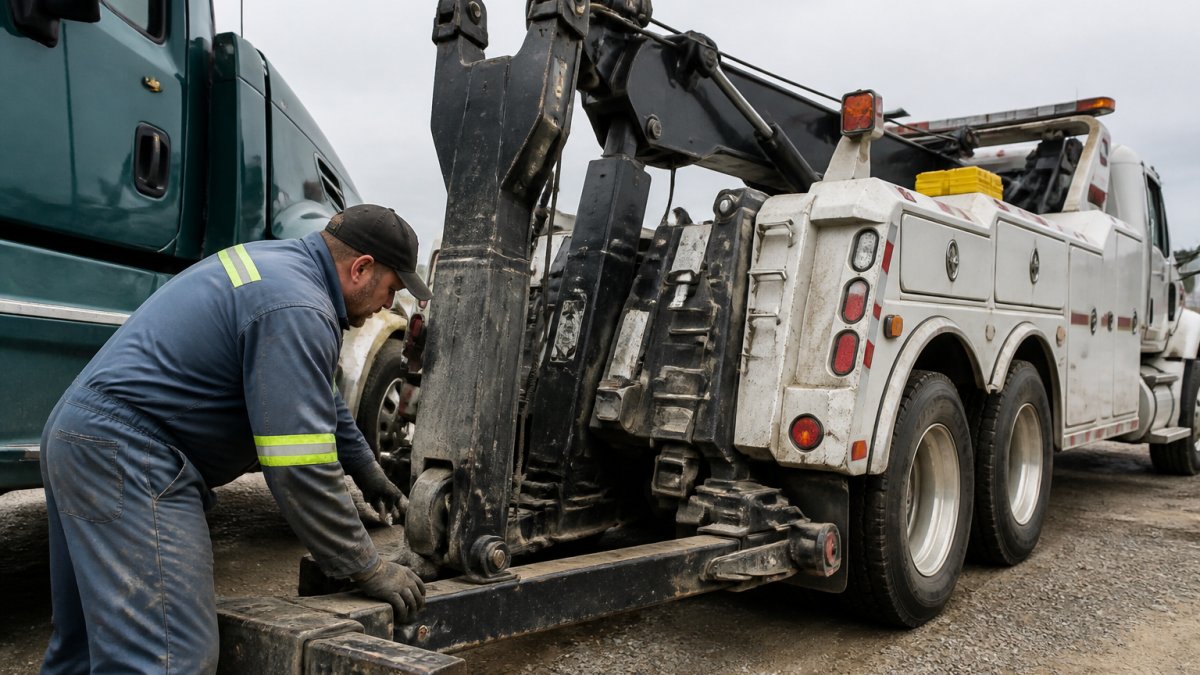
What dispatch is actually calculating. When you call, the dispatcher is matching your job to the nearest available truck that can handle your vehicle. A light-duty flatbed may be five minutes away but already on another call; a heavy-duty wrecker may be twenty minutes out but free.
How to estimate arrival yourself. Use the same variables dispatch uses:
- Distance: Ask how many miles the truck is traveling. In normal traffic, a light-duty tow truck averages roughly 25-35 mph on surface streets and 45-55 mph on highways. A 10-mile highway run is often 15-20 minutes; the same distance through city lights can be 30-40 minutes.
- Time of day: Rush hour (roughly 7-9 a.m. and 4-7 p.m. on weekdays) can double a surface-street estimate. Overnight calls are usually faster unless a storm has created a backlog.
- Weather: Rain, snow, and ice slow every truck and increase call volume at the same time. Add 15-30 minutes to any estimate in active precipitation.
- Access: A car in a low-clearance garage, a tight alley, or an unpaved shoulder takes longer to load and may require a different truck. Tell dispatch about access up front so the ETA reflects it.
What to do while you wait. Stay on the line with dispatch for updates rather than calling back repeatedly, repeated calls don't move your job up the queue and can tie up the dispatcher. If your ETA passes with no truck in sight, call once and ask for the current status and the driver's name.
When to call 911 instead. If your vehicle is in a live traffic lane, if anyone is injured, or if you feel unsafe where you are standing, call 911 first. A tow truck cannot block traffic for you, and police can secure the scene while you wait. Towing can wait; safety cannot.
Flat Tire Roadside Assistance and Other Roadside Help
Flat tire roadside assistance is usually faster than a full tow, so ask for it first when the tire is the only problem. Many providers handle a tire change, jump-start, lockout, or fuel delivery on the spot, and you drive away without a tow bill.
The full menu of roadside help generally includes:
- Tire changes using your spare
- Battery jump-starts for a dead battery
- Lockout assistance when keys are inside
- Fuel delivery if you run dry
- Winching for a stuck vehicle
If the spare is flat, missing, or the wheel is damaged, a tow to a shop is the safer route. We tell callers to check the spare before requesting a tire change, since a missing spare turns a quick fix into a tow anyway.
Emergency Towing Cost: What Drives the Bill
Emergency towing cost depends on distance, vehicle type, time of day, and the equipment needed. There is no single flat rate, because a light-duty tow from a parking lot and a heavy-duty recovery from a ditch are very different jobs.
The main factors that move the price:
| Cost Factor | What It Means | How to Control It |
|---|---|---|
| Tow distance | Miles from pickup to drop-off | Tow to the nearest shop, not the farthest one |
| Vehicle type | Light-duty vs. heavy-duty truck | Give the correct vehicle details up front |
| Time of day | After-hours and holiday calls | Ask about after-hours rates before dispatch |
| Equipment | Flatbed, wheel-lift, or winching | Ask which method your vehicle needs |
| Access | Garage, tight lot, or off-road | Tell dispatch about clearance issues early |
Ask for the quote before the truck rolls and confirm what's included. If your insurance or a roadside plan covers towing, check whether the provider bills the plan directly or expects you to pay and seek reimbursement. The National Association of Insurance Commissioners consumer guide explains how to review your policy's towing coverage before you need it.
How to Verify a Tow Provider and Avoid Scams
Verifying a tow provider takes two minutes and protects you from the worst outcomes. Confirm the company name, ask for the price in writing, and make sure the truck that arrives matches the company you called.
Check these before you let anyone hook up your car:
- The dispatcher gave a company name and a price range on the phone
- The truck has the company name and a phone number on the side
- The driver can show identification and a business license when asked
- You know the destination shop and the total before the vehicle moves
- You received a receipt or invoice, not just a cash demand
Predatory operators exist, and they target stranded drivers who feel they have no choice. A legitimate provider never pressures you to sign before you understand the price. The Federal Trade Commission guidance on avoiding scams covers the red flags of high-pressure roadside offers.
What Happens During Pickup, Towing, and Vehicle Handoff
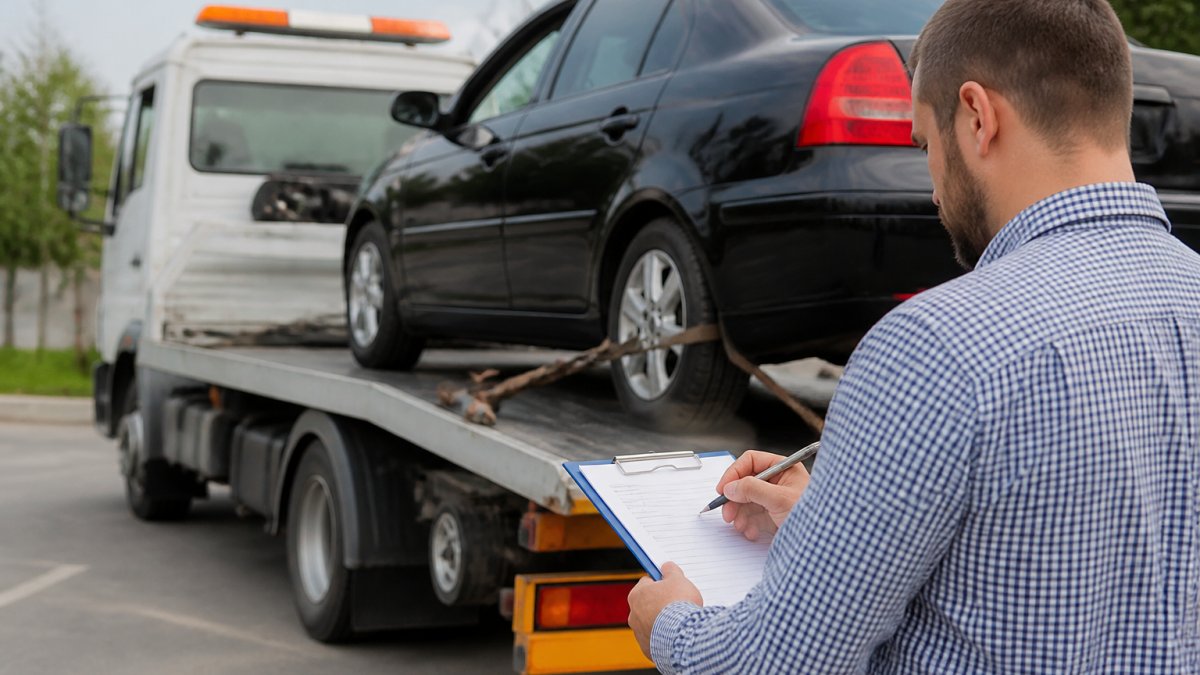
Pickup starts with a walk-around, and this is the step most drivers skip. Before the driver hooks up your car, walk the vehicle with them and note any existing damage, scratches, dents, cracked glass, missing trim. The driver should record it on the tow ticket. If they don't, ask them to.
What the driver should do before loading. A professional driver will:
- Confirm the destination address and the quoted price before the vehicle moves.
- Ask whether your vehicle is all-wheel drive, lowered, or has any aftermarket modifications that affect loading.
- Choose the right equipment, a flatbed for AWD, low-clearance, or damaged vehicles; a wheel-lift for many standard front-wheel-drive cars; dollies when the rear wheels can't roll.
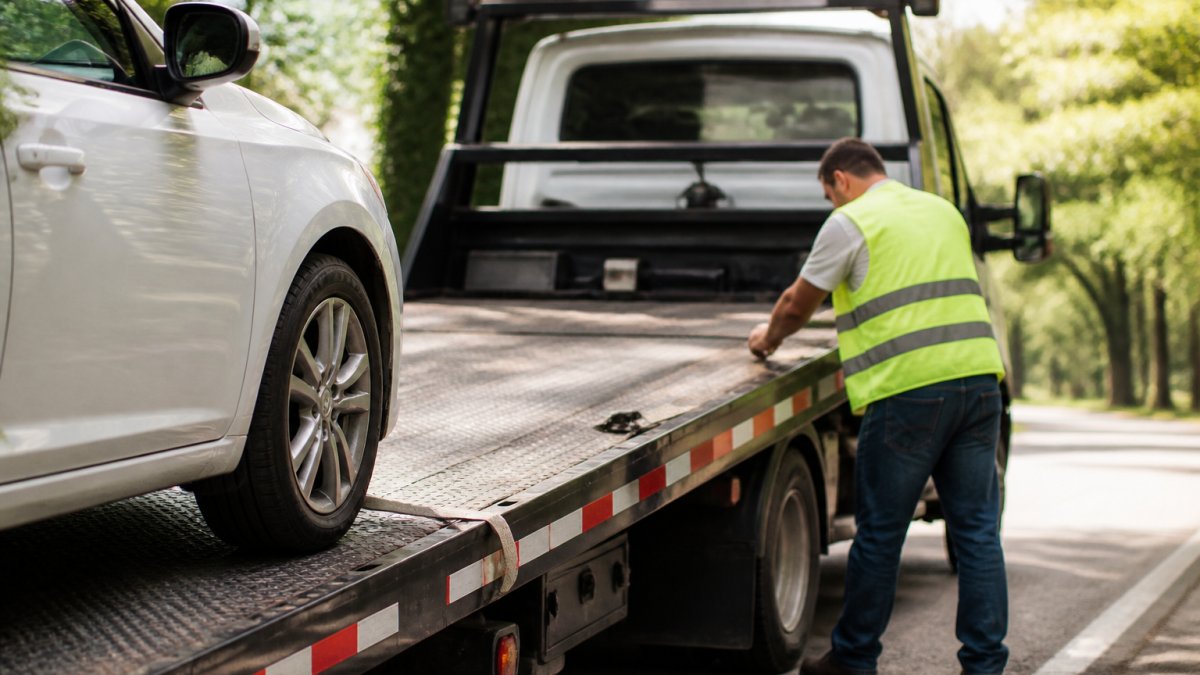
- Secure the vehicle with straps at all four corners and check the tie-downs before pulling away.
If the driver skips the walk-around or won't confirm the destination, that's a red flag. You are allowed to ask questions before you sign anything.
During the tow. You generally don't ride in the tow truck unless the provider's policy allows it and you've asked. Most drivers will tell you where to meet the vehicle at the destination.
At handoff. When you arrive at the shop or drop-off address, do a second walk-around before you sign the release. Check the same four sides and roof you photographed at pickup. Look for new scratches, scrapes, or fluid leaks under the car.
For drivers in a tight garage or an awkward spot, knowing the right equipment matters. If you're searching for a tow in the area, you can find our location and service area to confirm coverage before you call.
Conclusion
A breakdown is stressful enough without wondering whether help will actually show up or what it will cost. The right provider gives you a clear price, a realistic arrival window, and a driver who treats your vehicle like their own. Carlito's Towing Services offers 24/7 roadside assistance with fast response times and affordable pricing across the Metro DC area, from jump-starts to heavy-duty towing. CONTACT US and get back on the road with peace of mind at any hour.
Frequently Asked Questions
What should I do while waiting for an emergency tow truck?
Move to a safe spot away from traffic, such as behind a guardrail or inside your vehicle with seatbelts on if you cannot exit safely. Turn on your hazard lights, set out reflective triangles if you have them, and stay visible. Keep your phone charged and share your live location with the dispatcher. Do not stand between your car and oncoming traffic, and never attempt repairs on a busy road. When the tow truck arrives, confirm the driver's name and company before unlocking your vehicle.
How long does it usually take for a tow truck to arrive?
Tow truck response time depends on traffic, weather, distance, and how many calls the provider is handling. In dense metro areas, a local provider may arrive within 15 to 30 minutes, while heavy-duty or after-hours calls can take longer. Ask the dispatcher for an estimated arrival time and a callback number. If the wait stretches well past the estimate, call back to confirm your place in the queue rather than assuming the truck is not coming.
Does emergency towing include jump starts and tire changes?
Many emergency towing providers also offer roadside assistance such as jump-starts, flat tire roadside assistance, lockout help, and fuel delivery. These services are often billed separately from a tow, so ask what is covered before the driver begins work. If your battery is dead or you have a flat, a roadside call may solve the problem without a tow. Confirm the scope of service when you call so you are not surprised by extra charges.
How much does emergency towing typically cost?
Emergency towing cost varies by distance, vehicle type, time of day, and the provider's rates. Heavy-duty towing, after-hours service, and difficult locations like parking garages usually cost more than a standard light-duty tow. Ask for a quote upfront, including any service call fee, mileage charge, and winching fee. If you have a roadside plan or insurance coverage, confirm whether the provider bills directly or whether you pay and seek reimbursement.