 how-to
What Do Towing Costs for Long Distances Really Run?
Last Updated: October 27, 2026
Quick Summary
Long-distance towing costs are built from a base or hookup fee, a per-mile rate applied to the transport distance, and add-on charges for equipment, timing, or vehicle condition. The mileage rate dominates on long tows, so confirm whether providers bill loaded miles or total miles, since round-trip billing can roughly double the mileage charge.
- Ask for line items instead of a quoted total so you can compare providers on equal footing.
- The mileage rate typically covers fuel, driver time, truck wear, and insurance, but not the base fee or surcharges.
- Many carriers publish a local rate for the first 50 to 100 miles and a lower long-distance rate beyond that.
- A quote given over the phone without your vehicle details is an estimate, not a price.
- Call your insurer to ask the per-tow limit, any distance cap, and whether reimbursement needs a receipt or pre-authorization.
Table of Contents
- How Towing Costs for Long Distances Are Actually Built
- Long-Distance Towing Cost per Mile: What the Mileage Rate Covers
- What a 100-Mile Tow Cost Looks Like in Practice
- Towing Fees and Extra Charges That Change the Total
- How to Compare Long-Distance Towing Quotes Line by Line
- Insurance, Roadside Assistance and Reimbursement on Long Tows
- Alternatives to Towing a Car Long Distance
- Requesting a Long-Distance Towing Estimate from Carlito's
- Frequently Asked Questions
How Towing Costs for Long Distances Are Actually Built
Long-distance towing costs are built from three core pieces: a base or hookup fee, a per-mile rate applied to the transport distance, and add-on charges for equipment, timing, or vehicle condition. Understanding that structure matters because it lets you sanity-check any quote before you agree to it.
Here is the short version. A long-distance tow is any transport beyond your local service radius, usually where the mileage charge starts to outweigh the base fee.
A common mistake is focusing only on the quoted total. Ask for the line items instead. A quote you can read is a quote you can compare.
Federal Trade Commission consumer advice on auto service and repair
Long-Distance Towing Cost per Mile: What the Mileage Rate Covers
The mileage rate is the price charged for each mile your vehicle travels on the tow truck, and it typically covers fuel, driver time, truck wear, and insurance. It does not always cover everything else. That distinction is where most confusion starts.
What the per-mile charge usually reflects:
- Fuel and tolls along the route
- Driver labor for the transport window
- Truck maintenance and mileage-related wear
- The carrier's liability coverage while your vehicle is loaded
What it often does not cover:
- The base or hookup fee to load the vehicle
- After-hours or night surcharges
- Special equipment for low-clearance or non-running vehicles
- Storage if delivery is delayed
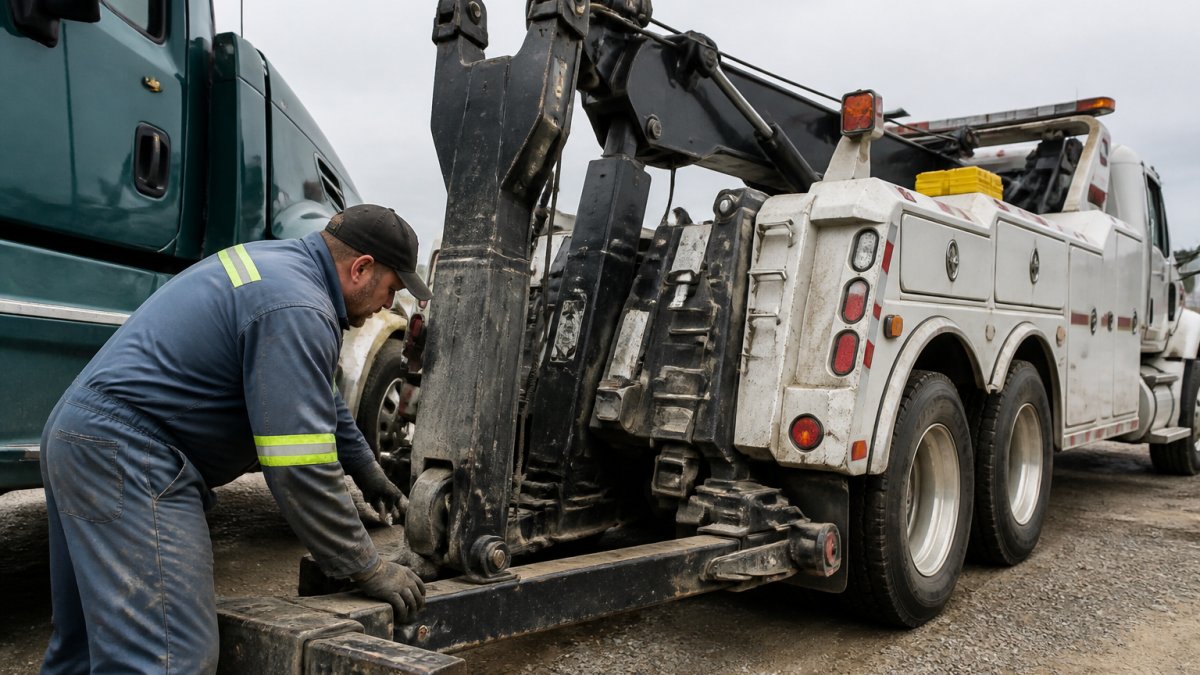
Rates vary by region, provider, and truck type. Heavy-duty towing and flatbed transport generally run higher than a standard wheel-lift tow because the equipment and insurance costs are higher.
What a 100-Mile Tow Cost Looks Like in Practice
A 100-mile tow is priced as a base fee plus 100 miles at the carrier's per-mile rate, plus any add-ons that apply to your vehicle and timing. There is no single number, because the rate is set by the provider and the route.
A Transparent Long-Distance Estimate Model
Use this formula, and write down each assumption so you can compare providers on equal footing:
Estimated total = Base or hookup fee + (Per-mile rate × Billed miles) + Add-ons
Three assumptions drive the answer, and each one is a place where quotes diverge:
- Billed miles. Confirm whether the provider bills loaded miles (the distance your vehicle travels on the truck) or total miles (including the truck's deadhead trip to reach you). A round-trip billing method can roughly double the mileage charge on a short-notice long tow.
- Per-mile rate tier. Many carriers publish a local rate for the first 50-100 miles and a lower long-distance rate beyond that threshold. Ask where the tier break falls and whether the lower rate applies to all miles or only the miles past the break.
- Add-on stack. Base fee, after-hours surcharge, winching, storage, and toll pass-throughs are separate from the mileage rate. List which ones apply to your vehicle before you multiply.
Sample Distance Scenarios (Illustrative)
The numbers below are illustrative placeholders, not quotes. Substitute your provider's actual base fee and per-mile rate to see how the total scales. The pattern matters more than the digits: the base fee dominates short tows, and the mileage rate dominates long ones.
| Transport distance | Base fee (example) | Per-mile rate (example) | Mileage subtotal | Illustrative total before add-ons |
|---|---|---|---|---|
| 25 miles (local edge) | $75 | $4.00 | $100 | $175 |
| 50 miles | $75 | $4.00 | $200 | $275 |
| 100 miles | $75 | $3.50 | $350 | $425 |
| 250 miles | $75 | $3.00 | $750 | $825 |
| 500 miles | $75 | $2.75 | $1,375 | $1,450 |
Read the table this way: at 25 miles the base fee is roughly 43% of the total; at 500 miles it is about 5%.
Why the Same 100 Miles Can Produce Two Very Different Bills
Two identical routes can produce different bills for reasons that have nothing to do with distance. Vehicle weight changes the rate. A non-running vehicle needs extra equipment to load. A night pickup may carry a surcharge. Tolls on the route get passed through.
A common pattern is that the provider with the lowest advertised per-mile rate quotes the highest add-on stack once vehicle details are disclosed.
Towing Fees and Extra Charges That Change the Total
Extra charges are the line items that turn an attractive quote into a surprising bill, so ask about each one before the truck rolls.
Watch out: a quote given over the phone without your vehicle details is an estimate, not a price. Tell the dispatcher your vehicle's make, model, drivetrain, and whether it rolls, brakes, and steers. That single step prevents most billing disputes.
How to Compare Long-Distance Towing Quotes Line by Line
Comparing quotes means normalizing them, not just reading the totals. Two providers can quote the same route and produce totals that differ by hundreds of dollars because they define "miles," "base fee," and "delivery" differently. Put every quote into the same format before you decide.
The Normalization Worksheet
For each quote, capture the same fields in the same order. If a provider will not supply a field, write "not disclosed" and treat that as a pricing risk, not a zero.
| Field to capture | Why it changes the total | What to ask the dispatcher |
|---|---|---|
| Base or hookup fee | Sets your starting cost and whether it is flat or variable | Is it flat for my vehicle, or does it change with weight or condition? |
| Per-mile rate and tier break | Dominates long distances; tier breaks can swing the total | What is the rate for the first 50 miles, and what is the long-distance rate beyond that? |
| Billed miles method | Loaded miles vs. round trip can roughly double the mileage charge | Do you bill loaded miles or total miles including deadhead? |
| Dispatch fee | A separate charge that may or may not be included in the base fee | Is dispatch included in the base fee or added separately? |
| Fuel and toll treatment | Tolls and fuel surcharges are often pass-throughs | Are tolls included, estimated, or billed at cost with receipts? |
| After-hours or emergency surcharge | Night, weekend, and holiday pickups often carry a premium | What is the surcharge, and when does it apply? |
| Special equipment | Winching, dollies, or low-clearance ramps add line items | Does my vehicle need equipment beyond the standard hookup? |
| Storage | Delay at delivery can trigger daily storage | What is the daily storage rate, and when does it start? |
| Insurance and cargo limit | Protects your vehicle in transit; low limits shift risk to you | What is the cargo liability limit per vehicle? |
| Delivery window | Guaranteed vs. estimated changes your planning and risk | Is the delivery window guaranteed or estimated? |
The Three Questions That Expose a Non-Comparable Quote
Most billing disputes trace back to one of three ambiguities. Ask these before you book:
- "Is this quote all-in, or will add-ons appear at pickup?" A phone quote given without your vehicle details is an estimate, not a price. Tell the dispatcher your vehicle's make, model, drivetrain, and whether it rolls, brakes, and steers, then ask for the itemized total in writing.
- "What is the total out-the-door number if nothing changes?" Get a single figure that includes base fee, mileage, dispatch, tolls, and any surcharge that applies to your timing. That is the number you compare, not the advertised per-mile rate.
- "What changes the price after I book?" Common answers include a vehicle that will not roll, a pickup location the truck cannot access, a delivery delay that triggers storage, and a route change. Knowing the triggers lets you decide whether to accept the risk or negotiate them into the quote.
Our team recommends getting the quote in writing with each line itemized, then running the normalization worksheet above against every provider you are considering. For a fuller picture of what a legitimate service includes, see our guide to emergency towing services and what to expect.
Federal Trade Commission consumer advice on auto service and repair
Insurance, Roadside Assistance and Reimbursement on Long Tows
Roadside assistance and insurance reimbursement can offset part of a long-distance tow, but the coverage terms decide how much. Many auto policies and roadside plans cap the tow benefit by distance or by dollar amount, and long transports often exceed those caps. The gap between the cap and the actual bill is yours to pay.
Before you book, call your insurer or plan and ask three questions: what is the per-tow limit, is there a distance cap, and does reimbursement require a receipt or pre-authorization. Some plans pay the provider directly; others reimburse you after you submit paperwork. Knowing which one applies changes what you should ask the dispatcher at pickup.
Alternatives to Towing a Car Long Distance
Towing is not always the cheapest way to move a vehicle a long way. Depending on your situation, these alternatives can make more sense:
- Drive it yourself if the vehicle is roadworthy and the trip is manageable.
- Ship it with an auto transport carrier for very long moves, where per-mile towing rates can climb.
- Repair locally first when the breakdown is minor and a local fix gets you home.
- Store it if the move is temporary and you can retrieve the car later.
Each option trades cost against time, risk, and convenience. A non-running vehicle rules out driving, and a tight timeline may rule out waiting for a transport carrier's schedule.
Requesting a Long-Distance Towing Estimate from Carlito's
Getting an accurate long-distance estimate starts with good information. Have your pickup and delivery locations, your vehicle details, and your timing ready when you call. The more precise you are, the tighter the estimate.
At Carlito's Towing Services, we provide 24/7 roadside assistance and towing across the Metro DC area, including heavy-duty towing for commercial fleets. One customer, Frank Gaitley, said we came out within 10 minutes at midnight on a cold night. Another customer described a prompt, friendly, and professional response after being left stranded by an insurer's provider search.
You can find our service area and contact details on our location page to start your estimate.
Frequently Asked Questions
How are long-distance towing costs calculated?
Ask the provider how the quote is calculated and which charges apply to your situation. Request the details directly from the provider before deciding.
Is it cheaper to tow a car or have it transported long distance?
The answer depends on your situation. Contact providers for current quotes and compare the options available for your vehicle and route before deciding.
What extra fees can increase the cost of a long-distance tow?
Ask the provider which charges apply to your situation and request the details before authorizing service.
Is towing covered by insurance?
Check with your insurer or plan provider to confirm whether your coverage applies and what steps you need to follow.
Long-distance towing bills get confusing fast, and a vague quote only makes it worse. Carlito's Towing Services offers 24/7 roadside assistance, fast response times, and affordable pricing across the Metro DC area, with heavy-duty capability for commercial vehicles. Get started with Carlito's Towing Services and get a clear, itemized estimate before your vehicle moves.