 how-to
How Do You Safely Tow a Luxury Car?
Last Updated: November 6, 2026
Quick Summary
To tow luxury car safely, use a flatbed so all four wheels ride on the deck, keeping the drivetrain and undercarriage free from stress. Secure the tires with soft straps and wheel nets rather than the bodywork, and confirm the towing method with an experienced operator before loading.
- Flatbed towing keeps all four wheels off the ground, protecting the drivetrain and low clearance.
- Never tow an AWD vehicle with two wheels down or with a tow bar unless the maker approves.
- Photograph all four sides, wheels, undercarriage, odometer and fuel level before the truck arrives.
- Strap the tires with soft straps and wheel nets, never over bodywork, aluminum panels or control arms.
- Tell the driver the make, model, year, drivetrain, ground clearance and any modifications up front.
Table of Contents
- Why Towing a Luxury Car Demands a Different Approach
- Flatbed Towing for Luxury Cars: The Safest Method
- How to Tow an All-Wheel-Drive Car Without Drivetrain Damage
- Your Luxury Car Towing Checklist Before the Truck Arrives
- What to Tell a Tow Truck Driver About Your Vehicle
- Loading, Securing, and Unloading Without Damage
- Insurance, Liability, and Documenting Condition
- Booking a Luxury-Safe Tow in Silver Spring
- Frequently Asked Questions
Why Towing a Luxury Car Demands a Different Approach
Knowing how to safely tow luxury cars starts with one fact: these vehicles are not built like everyday sedans. A luxury vehicle carries tighter ground clearance, wider wheels, low-profile tires, and delicate body panels. One wrong hook point can cause costly bodywork and paint protection repairs.
The risks are real and specific:
- Low clearance means a standard wheel-lift can scrape the undercarriage or crack a front bumper.
- All-wheel drive and performance drivetrains can suffer transport damage if two wheels spin while two stay still.
- Aluminum and carbon-fiber panels flex differently than steel, so tie-downs placed wrong can warp a fender.
At Carlito's Towing Services, we treat every high-end vehicle with the care a specialized transport job requires. That distinction is the whole game. Below, we'll show you exactly how to prep, load, and secure a luxury car so it arrives exactly as it left.
Flatbed Towing for Luxury Cars: The Safest Method
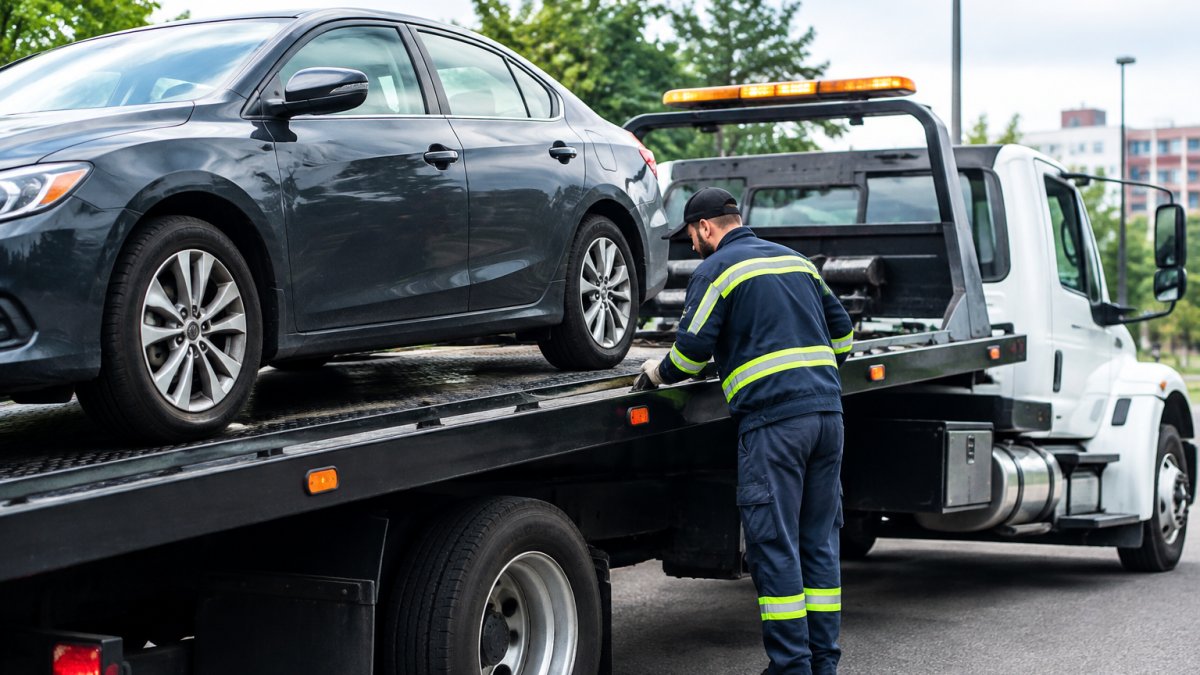
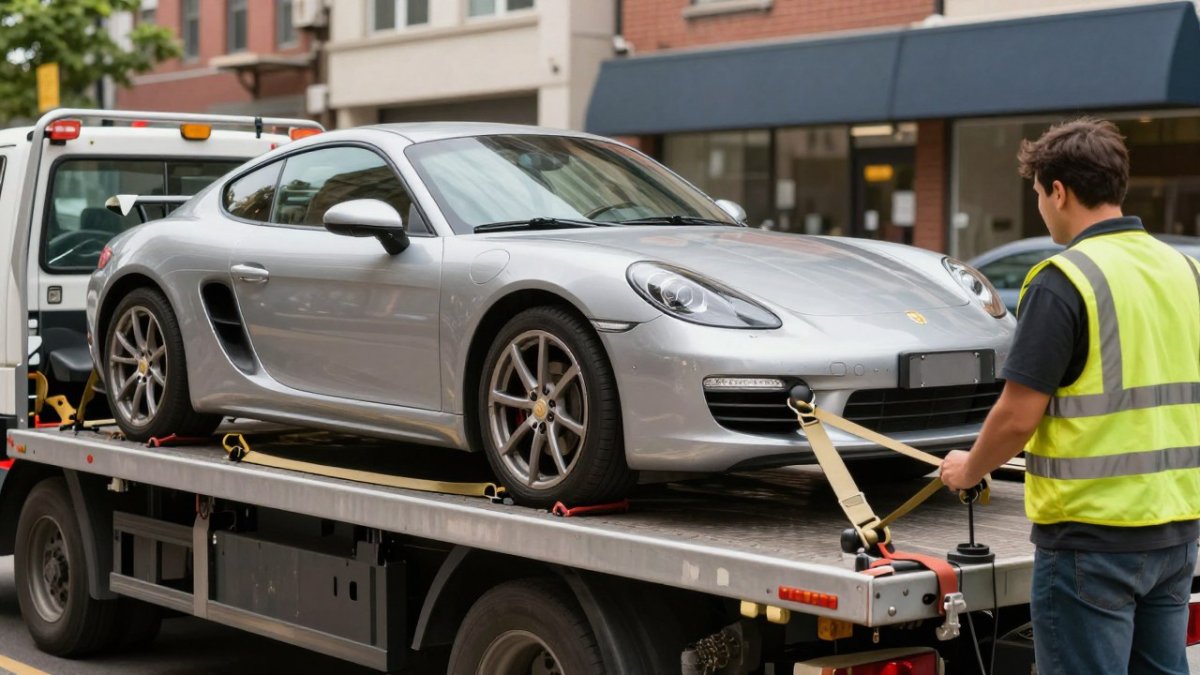
Flatbed towing for luxury cars is generally considered one of the safer methods because all four wheels ride on the deck. There is no drag on the drivetrain, no lift on the undercarriage, and no spinning wheels.
Here's why it wins:
- The whole vehicle sits level, so ground clearance stops being a worry.
- Soft straps and wheel nets can hold the tires rather than the frame or bodywork.
- A gentle winching angle can help protect low front lips and splitters.
Wheel-lift towing lifts only two wheels. That puts stress on the drivetrain and risks wheel damage. If you want the full breakdown of how the two methods differ, read our guide on flatbed or wheel lift towing before you decide.
How to Tow an All-Wheel-Drive Car Without Drivetrain Damage
To tow an all-wheel-drive car without damage, you must keep all four wheels off the ground or on a rolling dolly. Towing an AWD vehicle with two wheels down forces the drivetrain to turn with no lubrication flow. That can destroy a transfer case or differential.
A few rules keep the drivetrain safe:
- Use a flatbed for full-time AWD and performance systems.
- Never tow AWD with a tow bar or A-frame unless the maker says it's approved.
- Confirm the towing method with the experienced operator before loading.
Vehicle compatibility matters here, and owners should check the manufacturer's towing rules in the owner's manual. Some exotic car models require specific tie-down points, and getting that wrong is how transport damage happens.
These are the rules the article gives for keeping an AWD drivetrain intact during a tow.
| Situation | What to do | Why |
|---|---|---|
| Full-time AWD and performance systems | Use a flatbed | Keeps all four wheels off the ground |
| Towing with two wheels down | Avoid it | Drivetrain turns with no lubrication flow |
| Tow bar or A-frame on AWD | Never use unless maker approves | Can destroy transfer case or differential |
| Before loading | Confirm towing method with experienced operator | Prevents transport damage |
| Exotic car models | Check manufacturer's tie-down points | Wrong points cause transport damage |
| Alternative to flatbed | Rolling dolly | Keeps all four wheels off the ground |
Your Luxury Car Towing Checklist Before the Truck Arrives
A luxury car towing checklist saves time and protects the vehicle condition. Do these steps while you wait, so the tow truck can work fast and safely. Preparation before the truck arrives can help reduce the risk of damage.
Document the condition first. Walk around the car and photograph all four sides, each wheel and tire sidewall, the front lip and rear valance, and the undercarriage at each corner. Include the odometer and fuel level in one frame. Keep those photos until the car is back in your possession.
Match the prep to your drivetrain and suspension. A full-time all-wheel drive performance model needs a flatbed with all four wheels on the deck; a rear-wheel-drive sedan can sometimes use a wheel-lift, but low-profile tires and wide wheels still argue for a flatbed. If the car has adaptive or air suspension, check the owner's manual for a transport mode or ride-height setting, some makers specify a service height that must be set before loading. Note any lowered springs, front splitters, or side skirts, because those change the ramp angle the operator needs.
Clear the cabin and secure the electronics. Remove loose valuables, garage-door remotes, and toll transponders. Turn off the alarm and any auto-tilt mirror function, and confirm whether the steering lock engages when the car is off, the operator needs to know before winching. If the car is keyless, leave the fob with the driver or confirm the procedure for keeping the vehicle in neutral.
Plan the pickup access. In Silver Spring, pickup conditions vary block to block: a detached garage off a narrow residential street, a tight alley behind a storefront on Georgia Avenue, or a parking structure near downtown all change what the tow truck can reach. If the car sits in a low-clearance garage, prep looks different, our guide on how to tow a car out of a low clearance garage walks through the access steps. See how to tow cars from parking garages safely for the tight-space plan.
Confirm the destination and the receiving end. Give the driver the drop-off address, the receiving contact, and any access limits at the destination, a gated community, a dealership service lane with a height restriction, or a storage facility with limited hours. Confirm who will inspect the car on arrival and where the condition photos will be compared.
Watch out: If you cannot confirm the truck's deck length and ramp angle will clear your car's approach angle, ask the dispatcher about equipment options before the truck arrives, a too-steep ramp is a common cause of damage to front lips and splitters.
What to Tell a Tow Truck Driver About Your Vehicle
Clear communication prevents damage. Tell the driver these details up front, and the skilled driver can pick the right towing equipment and loading angle.
Share this:
- Make, model, and year, plus any modifications.
- Drivetrain type: AWD, rear-wheel, or front-wheel drive.
- Ground clearance and whether the car is lowered.
- Any known leaks, warning lights, or steering lock.
- The exact pickup spot and any access limits.
The driver can then match the tow truck to your vehicle. Vehicle compatibility is not a formality. A truck that's too small or a deck that's too steep causes scratches, wheel damage, and bodywork repairs.
Loading, Securing, and Unloading Without Damage
Loading, securing, and unloading are where most transport damage happens. Each step needs care, and rushing any one of them is how a high-end vehicle gets hurt. The mechanics matter more than the checklist.
Loading: control the approach angle. The deck and ramps form an angle, and a low front lip or splitter will contact the ramp if that angle is too steep. Careful loading can manage this by adjusting the ramps or deck angle to reduce the breakover angle.
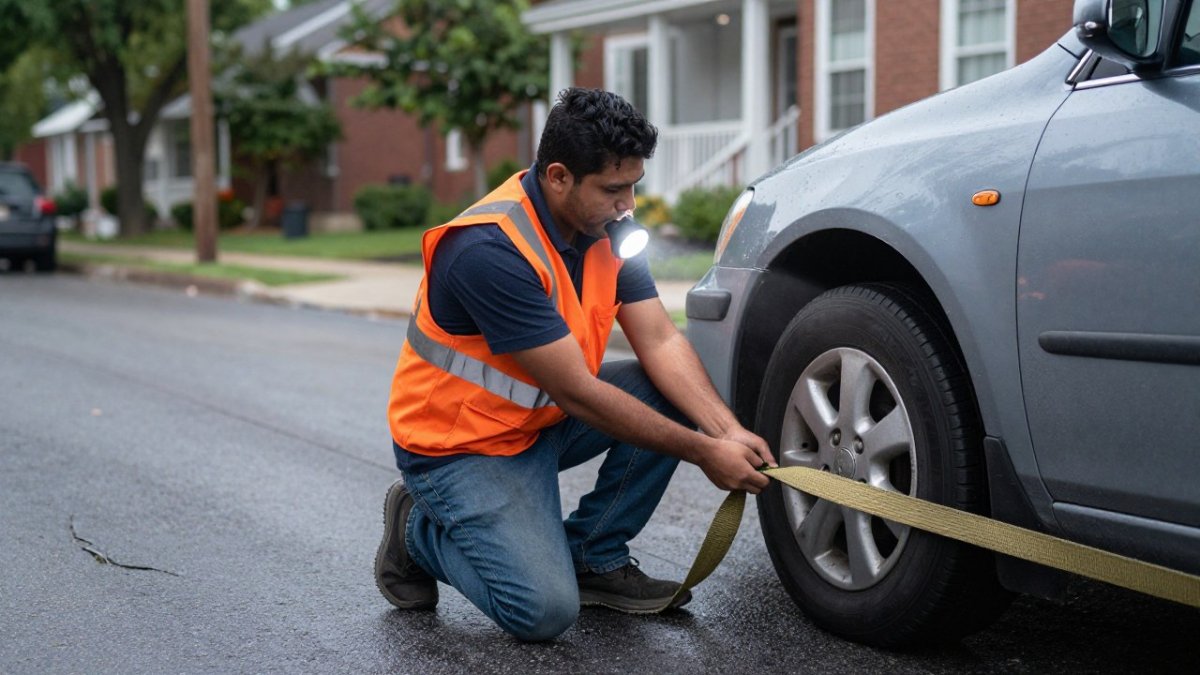
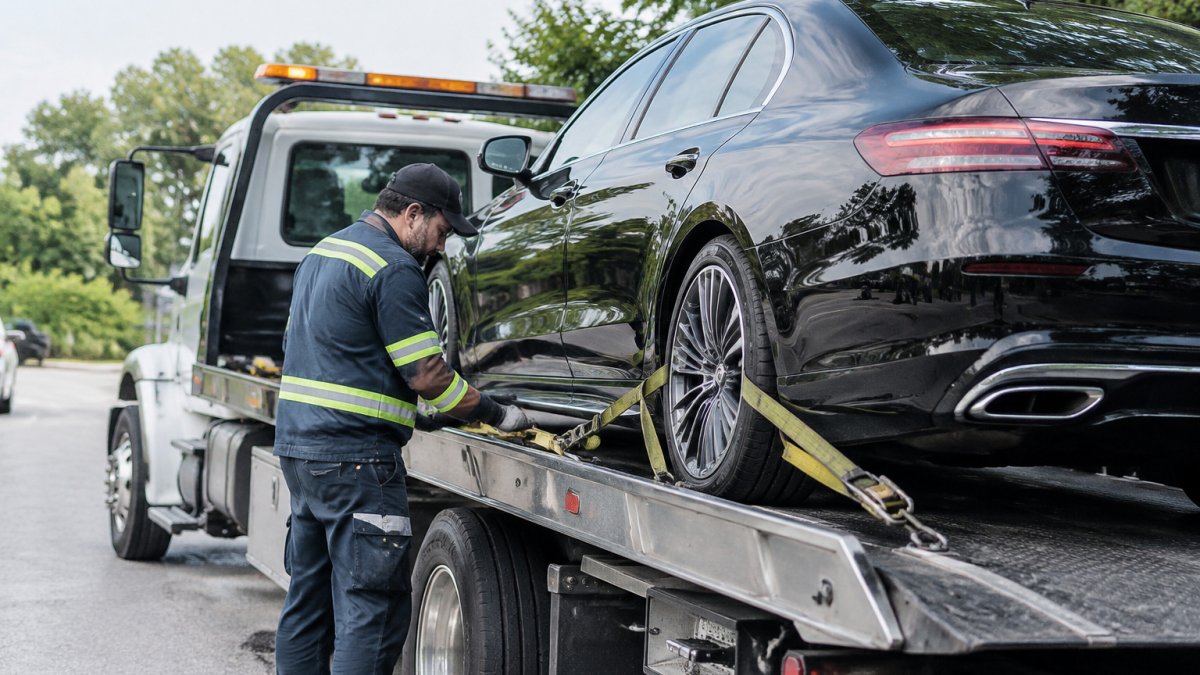
Securing: strap the tires, not the body. Use soft straps and wheel nets over the tires, and cross the tie-downs so the car cannot shift forward, back, or sideways. Never strap over bodywork, aluminum panels, or control arms, a strap over a fender or a suspension link can warp metal or pull an alignment out. Straps should be rated for the vehicle's weight and the ratchets should be locked. Checking strap tension after the car settles and again after the first few miles is a sensible precaution.
Unloading: reverse the sequence. Lower the deck slowly, check the ramp angle again, and release the tie-downs in reverse order so the car is never free to roll. Guide the car down at a walking pace with a spotter at the front corner. Keep the winch line or a safety strap attached until the car is fully on the ground.
Watch out: A wheel net that is too loose lets the tire walk inside the net during transit, and a strap that is too tight on a low-profile tire can damage the sidewall, the operator should confirm the net fits the wheel diameter and width before the car is winched up.
The goal is safe transport, and that means securely strapped and safely unloaded every time.
Insurance, Liability, and Documenting Condition
Document vehicle condition before and after the tow. Photos and a written note protect you if a damage claim comes up. This is the step most owners skip, and it's the one that matters when money is on the line.
Cover these points:
- Check whether your insurance covers towing and which provider it prefers.
- Ask about liability if damage happens during the tow.
- Keep the pre-tow photos until the car is back home.
Towing cost can climb with surprise fees. To spot them early, read our breakdown of hidden fees in emergency towing so a stressful night doesn't turn into an expensive one.
Booking a Luxury-Safe Tow in Silver Spring
Booking a luxury-safe tow in Silver Spring means choosing a provider that uses flatbed tow trucks, soft straps, and wheel nets as standard. That's the difference between a clean tow and a repair bill.
Carlito's Towing Services provides 24/7 roadside assistance across the Metro DC area, including Silver Spring, Beltsville, Laurel, and Rockville. We offer fast response times and affordable pricing. One customer, Frank Gaitley, described our team as the best tow service, arriving within 10 minutes at midnight on a cold night.
Searching for a luxury car towing service near me in MD? Check our location and contact details to arrange your tow. We'll match the right tow vehicle to your car and get it moved safely.
Frequently Asked Questions
What is the safest way to tow a luxury car?
A flatbed tow truck is generally regarded as a safer way to tow luxury car models. The vehicle rides fully on the deck with all four wheels off the ground, so there is no strain on the drivetrain. Soft straps and wheel nets can help protect paint and wheels, and a low load angle suits low-clearance vehicles.
How do you tow an all-wheel-drive luxury car without damage?
Never tow an all-wheel-drive car with two wheels on the ground. That spins the driveline without lubrication and can ruin the transfer case or differential. Use a flatbed so all four wheels are stationary, or a trailer designed for AWD transport. Tell the dispatcher your vehicle is AWD when you call so the right truck is sent.
What should I tell a tow truck driver before my luxury car is towed?
Share the make, model, year, drivetrain (AWD, RWD, or FWD), ground clearance, and any modifications like a front lip or lowered suspension. Mention where the tow hook or tie-down points are if you know them, and note any existing scratches or damage. Point out parking constraints such as a tight garage or steep driveway. Clear instructions help the driver choose the right equipment and loading angle.
Can a luxury car be towed with a tow dolly?
A tow dolly lifts only two wheels, so it is unsuitable for all-wheel-drive and most rear-wheel-drive luxury cars. It can work for some front-wheel-drive models, but the front bumper and low air dams still risk scraping on the dolly ramps. For high-value vehicles, a flatbed is often the preferred option. Check your owner's manual for the manufacturer's towing guidance before agreeing to any dolly or wheel-lift method.
Your luxury car deserves more than a generic hook-and-go. Carlito's Towing Services brings 24/7 roadside assistance, fast response times, and affordable pricing to every luxury vehicle tow in the Metro DC area. Get started with Carlito's Towing Services and move your car with confidence.