 how-to
How to Avoid Towing Damage: A Driver's Prep Guide
Last Updated: November 10, 2026
Quick Summary
You avoid towing damage by matching the tow method to your drivetrain, releasing the parking brake fully, shifting to neutral, and photographing all four corners before hookup. Flatbed towing is the safest option for AWD, 4WD, electric, hybrid, and low-clearance vehicles because nothing rolls on the ground.
- An engaged parking brake fights the winch and can warp rotors and burn brake components.
- Insist on a flatbed for all-wheel drive and four-wheel drive to protect the transfer case and center differential.
- Lift the rear on rear-wheel drive cars and the front on front-wheel drive cars so driven wheels stay off the ground.
- Photograph all four corners, the odometer, and warning lights before the truck moves and repeat after delivery.
- Do not sign a release or waiver at the scene, and request an itemized invoice rather than a lump sum.
Table of Contents
- Why Towing Damage Happens and How to Spot the Risk
- How to Prepare a Car for Towing
- How to Tow a Car Without Damage: Matching Method to Drivetrain
- Common Towing Damage and How to Prevent It
- Documenting Vehicle Condition Before and After the Tow
- What to Do If a Tow Truck Damages Your Car
- Silver Spring and Montgomery County Towing Rules to Know
- Book a Careful Tow in Silver Spring
- Frequently Asked Questions
Why Towing Damage Happens and How to Spot the Risk
Most towing damage comes from a mismatch between the truck, the car, and how the car was left before hookup, not from reckless driving.
Towing damage is any harm to a vehicle caused by lifting, dragging, or securing it during transport.
Risk starts when a car is dragged with its drive wheels on the ground, climbs when the parking brake is left engaged, and peaks when nobody checks undercarriage clearance.
The Four Systems Most Often Damaged
Four areas take the hit in almost every claim we hear about:
- Transmission and drivetrain from towing in gear or with drive wheels rolling
- Brakes from a parking brake left engaged
- Bumpers and undercarriage from steep ramps and low clearance
Warning Signs to Check Before the Truck Arrives
Walk around the car first. A fluid trail, a tire off its bead, or a loose bumper all change how the car should be loaded.
Watch out: a car parked nose-in against a curb or wall can force an awkward pull angle.
Drivers stuck in tight or low structures face extra risk, and our guide on how to tow a car out of a low clearance garage covers the specific hazards before the truck rolls up.
How to Prepare a Car for Towing
Preparation is where drivers win or lose. A few minutes of setup prevents most avoidable damage and gives the operator a clean starting point.
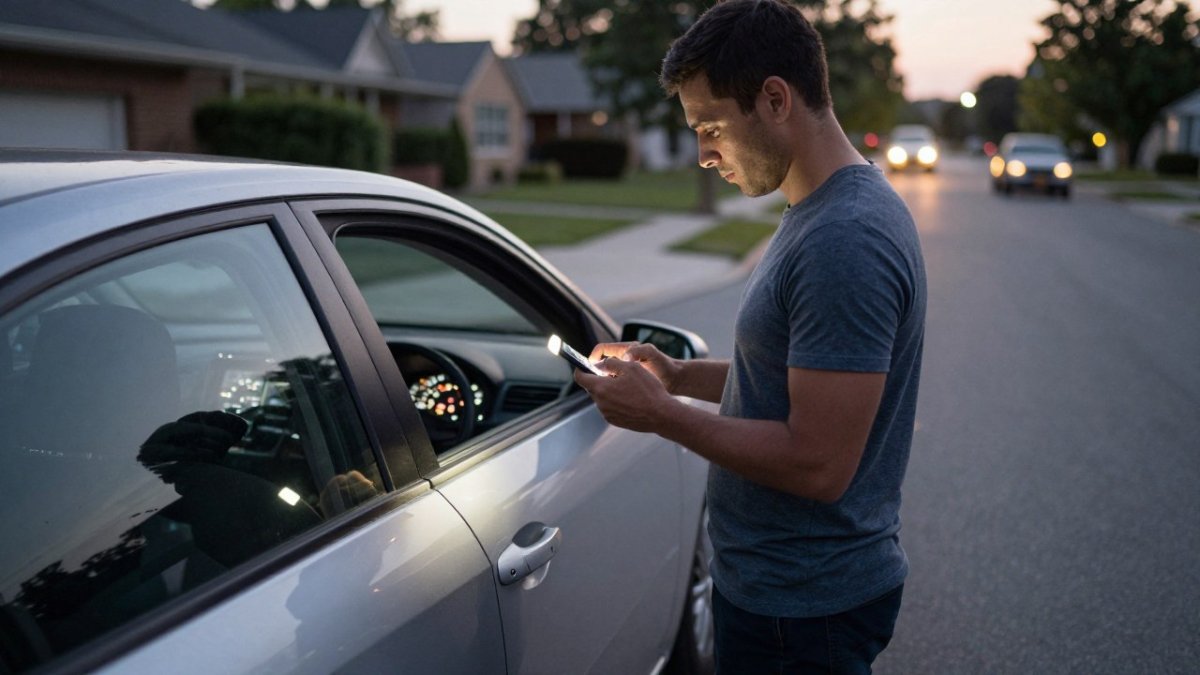
Here is the checklist we walk customers through:
- Turn the engine off and pocket the keys
- Release the parking brake fully
- Shift the transmission into neutral
Release the Parking Brake and Shift to Neutral
An engaged parking brake fights the winch up the ramp, and that drag can warp rotors and burn brake components.
Neutral matters just as much: a car left in park or in gear resists the pull, and the transmission takes the strain.
Secure Loose Items and Remove Valuables
Loose cargo becomes a projectile during a steep load angle. Clear the cabin and trunk of anything that can slide, and take valuables with you.
How to Tow a Car Without Damage: Matching Method to Drivetrain
The right method depends on which wheels drive the car, how low it sits, and whether it is electric or hybrid.
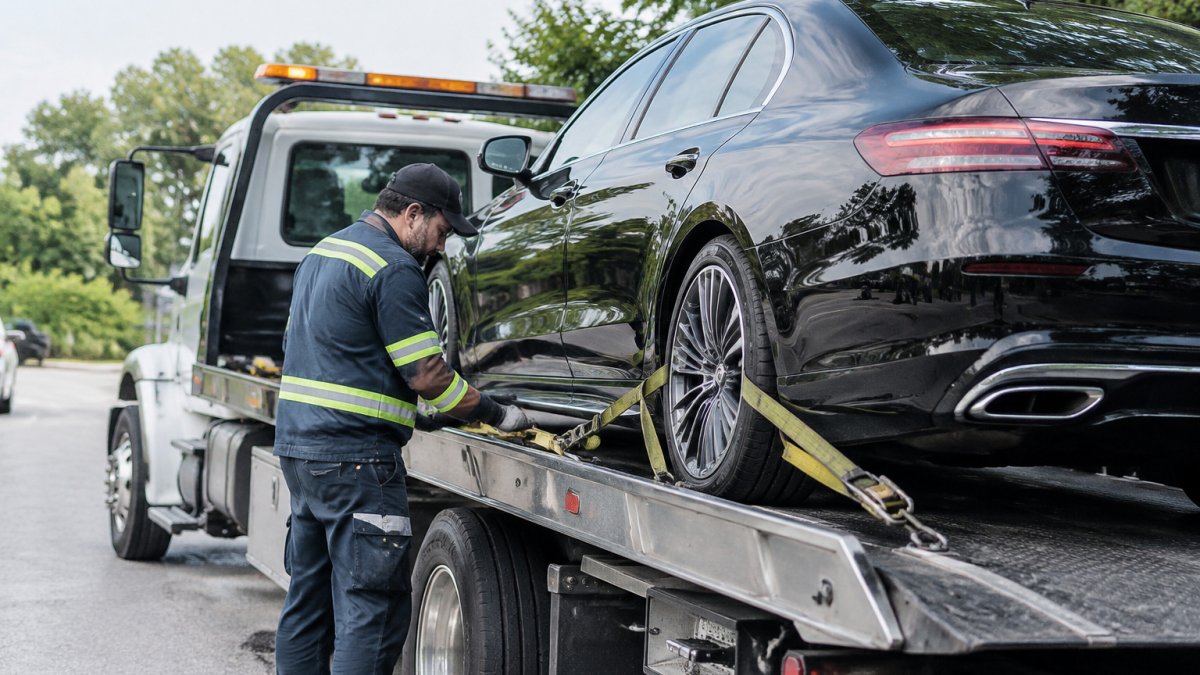
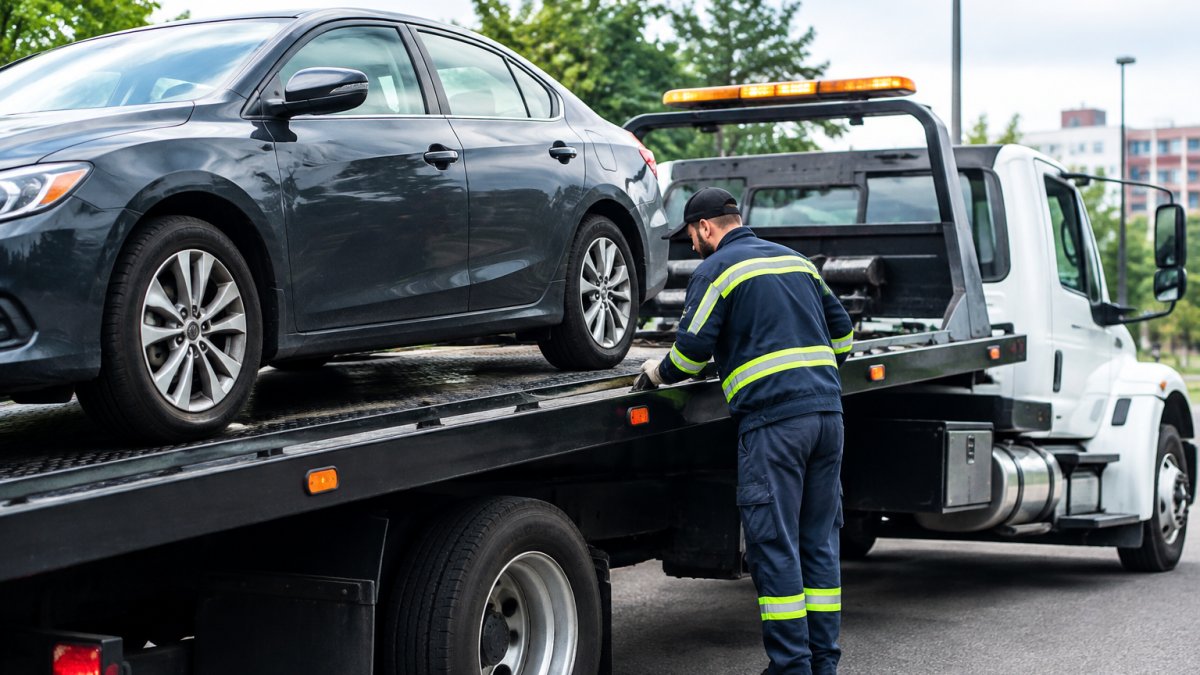
Flatbed towing loads all four wheels onto the deck. It is the safest option for all-wheel drive, four-wheel drive, electric, hybrid, and low-clearance vehicles because nothing rolls on the ground.
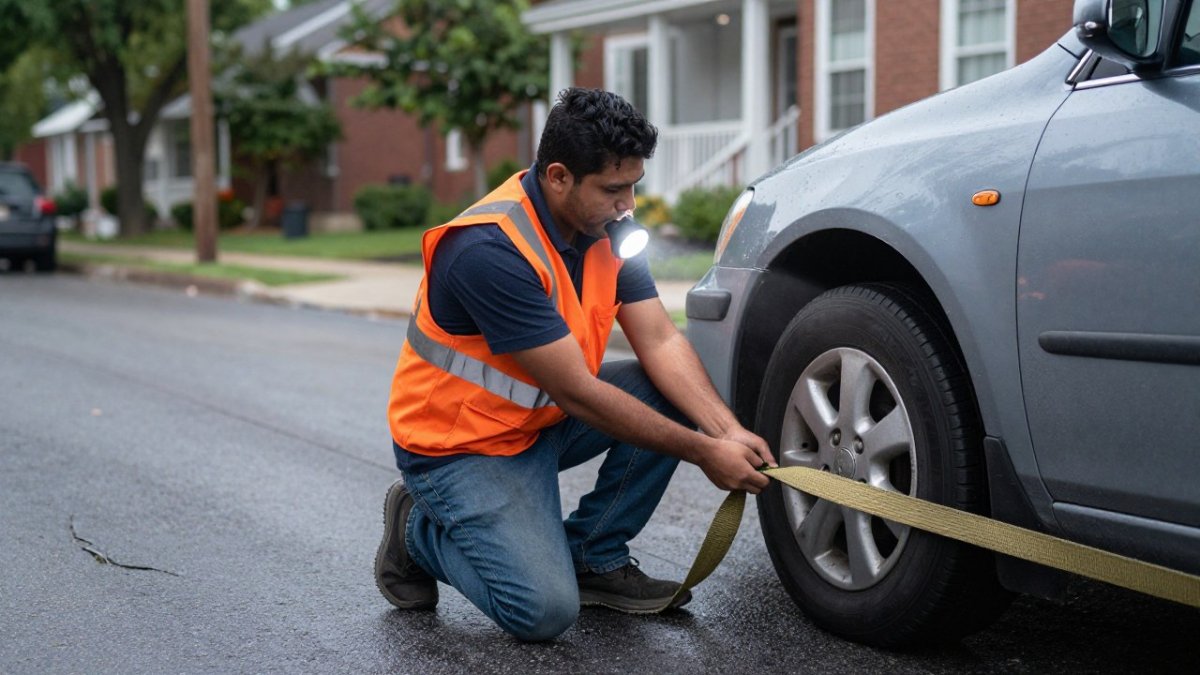
Wheel-lift towing raises two wheels and leaves the others rolling. It suits rear-wheel drive cars when the rear wheels are lifted, and front-wheel drive cars when the front wheels are lifted.
Dolly towing supports two wheels on a small trailer.
Flatbed, Wheel-Lift, and Dolly Towing Compared
| Method | Wheels Off Ground | Best For | Main Risk |
|---|---|---|---|
| Flatbed | All four | AWD, 4WD, EV, hybrid, luxury, low clearance | Ramp angle on steep drives |
| Wheel-lift | Two | Rear-wheel drive with rear lifted; front-wheel drive with front lifted | Drive wheels left rolling if the wrong end is lifted |
| Dolly | Two | Front-wheel drive with front on dolly; rear-wheel drive with rear on dolly | Straps loosening on long trips |
For a deeper breakdown, read our comparison of flatbed versus wheel lift towing. Owners of high-value cars should also review how to safely tow a luxury car before booking.
Drivetrain-Specific Rules That Prevent Claims
A common mistake is assuming any truck can handle any car. An all-wheel drive sedan on a wheel-lift is a transmission claim waiting to happen. Use these rules of thumb:
- All-wheel drive and four-wheel drive: insist on a flatbed. Lifting one axle and letting the other roll can spin the transfer case and damage the center differential.
- Front-wheel drive: a wheel-lift with the front wheels lifted, or a dolly with the front wheels on it, keeps the driven wheels off the ground. Never let the front wheels roll.
- Rear-wheel drive: lift the rear, or put the rear on a dolly. A wheel-lift that picks up the front and leaves the rear rolling is the classic mistake.
Watch out: a car with a boot, wheel clamp, or aftermarket wheel lock still attached cannot roll freely. Confirm the car is free of anti-towing devices before hookup.
Match the Method to the Vehicle, Not the Schedule
Confirm the towing method for your drivetrain before the truck rolls, and get that confirmation in writing if you can.
Common Towing Damage and How to Prevent It
Damage clusters around a few predictable failures. Knowing them in advance is half the fix.
- Transmission burnout: never tow a driven axle on the ground
- Brake drag: confirm the parking brake is fully released
- Bumper scrapes: check ramp angle against your approach clearance
- Wheel and tire damage: inspect for cracks and low pressure first
The NHTSA guidance on vehicle safety recalls is worth checking too. An open recall on a steering or brake part makes a tow riskier.
What most guides miss is the tire clamp and wheel boot problem: a car with a boot or clamp attached cannot roll freely, and forcing it damages the wheel.
Documenting Vehicle Condition Before and After the Tow
Photograph everything, twice. A full before-and-after set is your strongest tool if a dispute starts.
Shoot these before the truck moves:
- All four corners at eye level
- Close-ups of any existing scratches or dents
- The odometer and dashboard warning lights
- The roofline and undercarriage if visible
Repeat the same shots after delivery. Note the date, time, and the operator's name. This record turns a he-said-she-said argument into a documented claim.
What to Do If a Tow Truck Damages Your Car
Stop and document before you drive away. Once the truck leaves, proving the damage came from the tow gets much harder, and insurers treat the post-tow window as the critical evidence period.
The First 30 Minutes
- Photograph the damage from several angles before you move the car, including a wide shot that shows the vehicle in its surroundings and close-ups with something for scale.
- Photograph the whole vehicle, not just the damaged area, so the record shows no pre-existing damage elsewhere.
- Note the company name, truck number, and driver name from the truck door and any paperwork. If the driver will not provide a name, photograph the truck and plate.
- Ask for a copy of the tow receipt and the authorization that allowed the tow. A receipt and the authorization document show who ordered the tow and why.
- Do not sign a release or waiver at the scene. A signature can be treated as acceptance of the vehicle's condition.
Preserve the Evidence
Keep the following together in one folder, paper or digital:
- The before-and-after photo set from the documentation section above
- The tow receipt and any authorization form
- The driver's name, truck number, and company contact
- A written timeline of what happened, with dates and times
Insurers often ask for before-tow photos. Without them, the claim becomes a he-said-she-said argument about whether the damage pre-existed.
Request an Itemized Invoice
Ask for an itemized invoice rather than a lump sum, showing the hookup fee, per-mile rate, storage charge, and any additional service. It gives you a paper trail and surfaces charges that may not match the posted rate. Keep the original and a copy.
File the Claim in Writing
Send a written claim to the towing company before calling your insurer. State the date, pickup and delivery locations, driver and truck number, and a description of the damage with the photo set attached.
Then report it to your insurer. Check with your insurer about whether your policy covers tow-related damage. Keep every record, including the claim number and the adjuster's name.
Maryland Consumer Rights and Complaint Channels
Maryland consumers have rights when a vehicle is damaged during a tow. The Maryland Attorney General consumer protection division handles complaints about unfair or deceptive business practices, including towing disputes.
For tows ordered by a private property owner or HOA, you can ask the lot owner for the authorization on record and the name of the contracted company.
Watch out: a verbal promise to "take care of it" from a dispatcher is not a claim.
Silver Spring and Montgomery County Towing Rules to Know
Local rules shape what a tow operator can and cannot do. Knowing them protects you on both sides of the hook.
Local rules for private-property and public-street towing vary, so check the posted signs and the rules that apply where your car was towed.
If your car was towed without your consent, check the signs at the lot and the posted contact information.
For drivers who want to compare providers before an emergency hits, our guide on how to choose a towing service in Silver Spring lays out the questions to ask.
Book a Careful Tow in Silver Spring
A careful tow starts with a careful operator, the part you cannot do yourself, and the part that decides whether your car arrives clean.
Carlito's Towing Services provides 24/7 roadside assistance across the Metro DC area, including Silver Spring, Beltsville, Laurel, and Rockville. We offer fast response times and affordable pricing, and we handle roadside help and heavy-duty towing.
One customer put it simply: "They came out within 10 minutes at midnight on a cold night."
Before you book, confirm the towing method for your drivetrain, the pickup location, and the destination, and ask about the price up front. Find our service area and contact details on our location page.
Get started with Carlito's Towing Services and get your vehicle moved without the damage risk.
A damaged car after a tow is a headache nobody needs.
Frequently Asked Questions
Does towing usually damage your car?
A properly executed tow on a suitable truck rarely causes damage. Problems usually trace back to a mismatched method, such as wheel-lift towing on an all-wheel-drive vehicle, or to skipped prep like leaving the parking brake engaged. Checking your owner's manual for the manufacturer's towing instructions and confirming the operator's method before the wheels leave the ground prevents most of it.
Can towing damage an automatic transmission?
Yes, if the drive wheels stay on the ground while the transmission is in park or the engine is off. Many automatic transmissions rely on the engine running to circulate fluid, so flat-towing or dolly towing with the drive wheels down can overheat internal parts. The safer route is a flatbed or lifting the drive wheels. Check your owner's manual, since rules differ by model and drivetrain.
How do I prepare a car for towing?
Shift into neutral, release the parking brake, and turn the wheels straight. Remove valuables and secure loose items so nothing shifts during transport. Photograph all four corners, the bumpers, and the wheels before the operator hooks up. Hand over the keys and tell the operator about any existing damage, low clearance, or modifications like a lowered suspension so they can adjust ramps or straps accordingly.
What should I do if a tow truck damages my car?
Photograph the damage immediately and compare it to your pre-tow photos. Ask the operator for the company name, driver ID, and dispatch number, and request a copy of the tow ticket. Report the damage to the towing company in writing the same day, then file a claim with your insurer. If the company won't resolve it, you can raise the issue with your local consumer protection office.