 listicle
10 Signs You Need Professional Towing Services
Last Updated: November 7, 2026
Quick Summary
You need professional towing when your vehicle overheats, smokes, leaks fluid, makes grinding noises, or loses braking, steering, or the ability to maintain speed in traffic. Any symptom that produces smoke, a burning smell, or a puddle under the car moves to the tow column. When unsure, describe the symptom to the dispatcher and let the operator decide.
- Steam from the hood means the cooling system failed; shut the engine off at the next safe pull-off.
- A soft or spongy brake pedal that sinks toward the floor means stop driving and call a tow.
- A flashing check engine light means stop driving because damage is happening right now.
- After a collision, do not drive if the car pulls to one side or smells of fuel.
- Flatbed towing is the safer choice for all-wheel-drive, low-clearance, and collision-damaged vehicles.
Table of Contents
- Signs Your Car Needs to Be Towed: When Driving Becomes Dangerous
- Car Overheating and Towing: Why You Should Pull Over Immediately
- Brake Failure, Transmission Trouble, and Other Mechanical Red Flags
- Accident Recovery and Collision Damage: When to Call a Tow Truck
- What to Say When Calling a Towing Company
- Roadside Assistance in Silver Spring, MD: What to Expect
- How to Choose the Right Towing Method for Your Vehicle
- Get Professional Towing Help From Carlito's Towing Services
- Frequently Asked Questions
Signs Your Car Needs to Be Towed: When Driving Becomes Dangerous
A vehicle that overheats, smokes, or loses power on a busy road is a hazard to everyone around it. Knowing the 10 signs you need professional towing services can be the difference between a repair bill and a collision. Drivers who stop early when a breakdown begins generally spend less and stay safer.
Professional towing is the dispatch of a licensed tow truck and trained operator to move a vehicle that cannot be driven safely, whether because of mechanical failure, collision damage, or a breakdown in a risky location.
Engine Overheating and Steam From Under the Hood
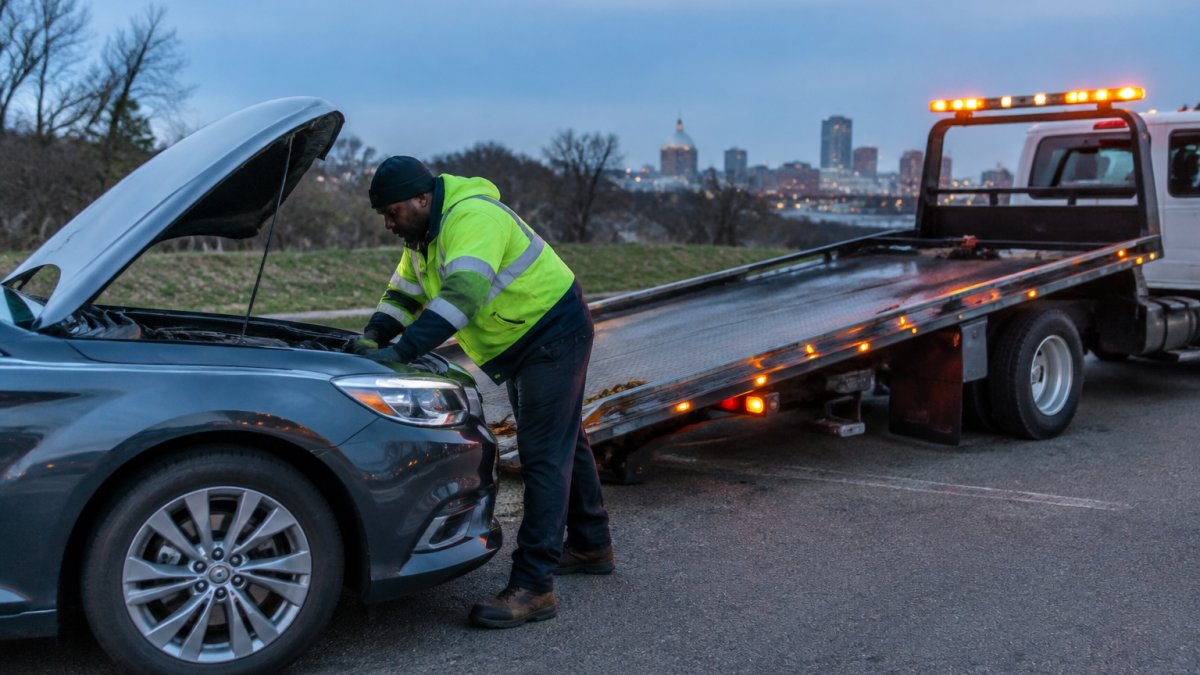
Steam pouring from the hood is the clearest signal to pull over. It usually means the cooling system has failed: a burst hose, a dead water pump, or a coolant leak. Watch the temperature gauge. If it climbs into the red, shut the engine off within the next safe pull-off. Continuing to drive can warp a cylinder head and turn a simple repair into a far larger one. Do not open the radiator cap while the engine is hot.
Smoke, Unusual Noises, and Fluid Leaks
Smoke, grinding, and puddles under the car are the trio that most often gets ignored. Blue or white smoke points to burning oil or coolant. Dark smoke suggests a fuel problem. Grinding or knocking noises usually mean worn bearings or brake components. A visible fluid leak, especially brake fluid or transmission fluid, means the system is already compromised. Any one of these is enough reason to stop and call for help rather than push on.
Car Overheating and Towing: Why You Should Pull Over Immediately
Overheating is the single most expensive warning sign to ignore. Metal expands when it runs hot, and aluminum engine components distort first. The safe sequence is short: pull to the shoulder, turn on your hazard lights, let the engine cool, and arrange a tow. Car overheating and towing go together because the fix is never "drive faster to get air." If you see steam from under the hood, treat the vehicle as undrivable until a mechanic inspects it.
Brake Failure, Transmission Trouble, and Other Mechanical Red Flags
Brakes, transmissions, and engines usually announce failure before they fail completely. The skill is knowing which symptoms mean "schedule service" and which mean "stop now and call a tow." Here is how each system behaves as it degrades, and where the line sits.
Brake failure: the symptoms that mean stop driving
A soft or spongy pedal that sinks toward the floor usually points to air in the hydraulic system or a failing master cylinder. A pedal that pulses underfoot often means a warped rotor. Grinding when you brake means the pads are worn past the friction material and metal is contacting metal. Any of these compromises stopping distance, and a brake system that is losing fluid can fail entirely without warning. If the pedal goes to the floor, pump it once, use the parking brake gently to slow down, and steer to the shoulder.
Transmission trouble: slipping, delayed engagement, and burnt fluid
Transmission problems show up as a delay when you shift from Park to Drive, an engine that revs without the car accelerating, or a shudder at steady speed. A burnt, scorched smell from the fluid dipstick is a serious sign; it means the fluid has overheated and the internal clutches are wearing. A flashing check engine light alongside harsh shifting is the manufacturer telling you a fault is active. Continuing to drive a slipping transmission can turn a fluid-and-filter service into a rebuild.
Engine stall, no-start, and misfire
An engine that stalls in traffic leaves you exposed in a live lane, and a no-start in a parking garage or on a shoulder is a towing situation, not a jump-start situation, once you have ruled out the battery. A flashing check engine light signals an active misfire that can dump unburned fuel into the catalytic converter and destroy it. If the engine cranks but will not catch, or catches and dies repeatedly, stop cranking and call for a tow rather than draining the battery and flooding the cylinders.
The severity order that decides tow versus drive
A useful rule most operators follow: if the symptom affects steering, braking, or the ability to maintain speed in traffic, treat the vehicle as undrivable. If it is a warning light with normal behavior, you can usually drive to a shop.
Watch out: a flashing check engine light is not the same as a steady one. A steady light means a fault is stored; a flashing light means stop driving, because the damage is happening right now.
Accident Recovery and Collision Damage: When to Call a Tow Truck
After a collision, the vehicle may look drivable and still be unsafe. Frame damage, a leaking fuel line, a damaged radiator, or a deployed airbag system can all hide behind intact body panels. If the car pulls to one side, if any wheel sits at an odd angle, or if you smell fuel, do not drive it. Accident recovery requires a tow truck with the right equipment to load a damaged vehicle without causing further mechanical damage. Call for vehicle recovery and let the operator assess the load. Roadway safety comes before convenience.
What to Say When Calling a Towing Company
A clear phone call gets a truck to you faster and prevents surprise charges. Competitors list what to say; the part they skip is how to describe a Silver Spring location precisely and what to do between the call and the truck's arrival. Both matter more than most drivers expect.
The details to have ready before you dial
- Your exact location. On a numbered route, give the route, direction of travel, and nearest cross street or exit. In a parking garage, give the garage name, the level, and the nearest stairwell or elevator bank. On a residential street, give the block and a nearby landmark.
- The vehicle's make, model, year, and drivetrain. All-wheel drive and low ground clearance change which truck is dispatched.
- What happened: overheating, no start, collision, flat tire, or lockout.
- Whether the car is in a travel lane, on a shoulder, or inside a structure. A car in a live lane is an emergency and should be flagged as one.
- Where the vehicle needs to go, and whether that destination is open when you arrive.
How to describe a Silver Spring location to a dispatcher
Silver Spring spreads across dense downtown blocks, park-and-ride lots, and highway shoulders, so a precise location helps. Give the dispatcher the street name and the closest intersection, then add a landmark the driver can see, such as a Metro station entrance, a shopping center, or a numbered route exit. If you are on the Capital Beltway or a connecting parkway, state the direction of travel and the last exit you passed.
What to do while you wait
Move as far from traffic as you safely can, turn on your hazard lights, and stay inside the vehicle with your seatbelt on if you are on a shoulder or in a live lane. If you must exit, exit on the side away from traffic and stand behind a barrier, not between the car and the road. Set out reflective triangles or flares only if you can do so without entering a travel lane.
Questions to ask before you agree to dispatch
Ask what the dispatch or hook-up fee covers and whether any quoted rate includes mileage, after-hours charges, or storage. Confirm the estimated arrival window and ask the dispatcher to call or text if it changes. Knowing these answers before the truck rolls protects you from add-on charges and lets you compare quotes fairly. For a fuller picture of what a dispatch involves, see what to expect from emergency towing services, and to spot add-on charges before you agree, review the hidden fees in emergency towing.
Roadside Assistance in Silver Spring, MD: What to Expect
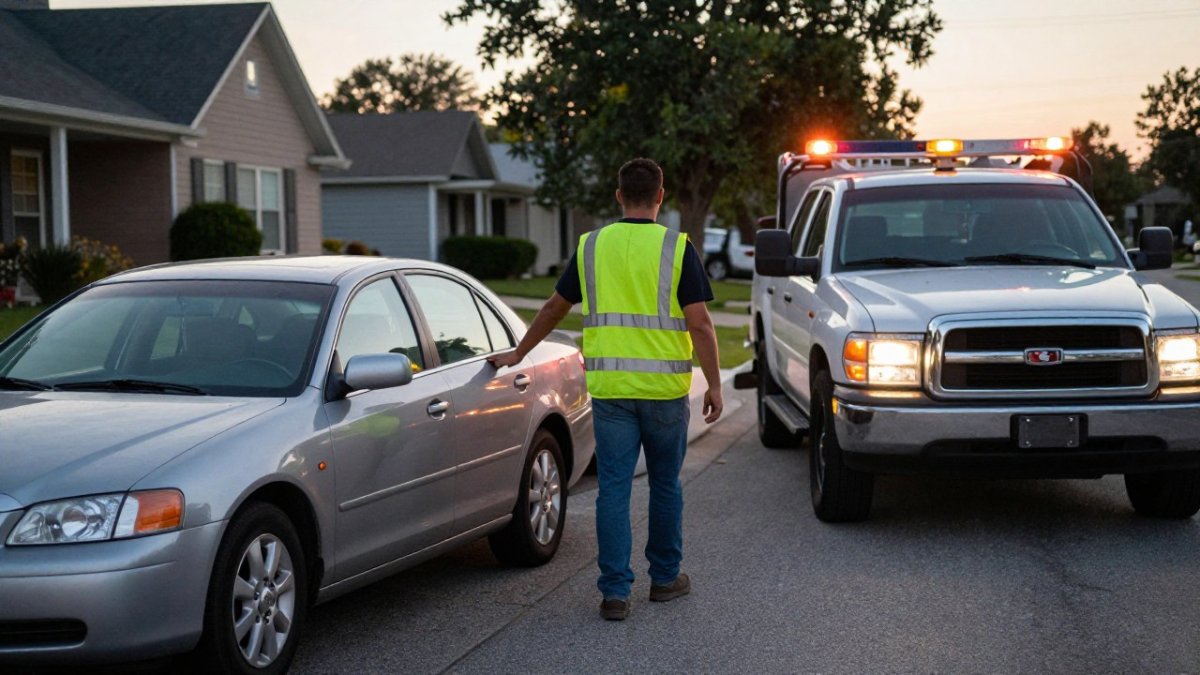
Roadside assistance in Silver Spring, MD, covers more than towing. Carlito's Towing Services offers 24/7 roadside assistance, and our Silver Spring location and contact details are available if you need to reach us directly.
How to Choose the Right Towing Method for Your Vehicle
The wrong truck can damage the right car. Flatbed towing loads all four wheels onto the bed, which is the safer choice for all-wheel-drive vehicles, low-clearance cars, and anything with collision damage. Heavy-duty towing with a larger wrecker is used for commercial trucks, box trucks, and vehicles that exceed standard weight limits. Tell the dispatcher your drivetrain and ground clearance when you call, and the operator will match the equipment. For a side-by-side breakdown of the two main methods, read flatbed versus wheel lift towing.
| Situation | Recommended Method | Why It Matters |
|---|---|---|
| All-wheel drive or 4WD | Flatbed | Keeps all wheels off the ground |
| Low-clearance sports car | Flatbed with ramps | Prevents bumper and undercarriage damage |
| Standard front-wheel-drive sedan | Wheel lift | Faster loading for routine breakdowns |
| Collision damage | Flatbed | Avoids dragging damaged wheels |
| Commercial truck or box truck | Heavy-duty wrecker | Handles weight beyond standard limits |
| Tight parking garage | Compact wheel-lift | Fits where a full-size bed cannot |
Get Professional Towing Help From Carlito's Towing Services
The decision point is simpler than it feels. If the car is overheating, smoking, leaking, or making grinding noises, stop driving and call a professional towing service. Before you book, our guide on how to choose a towing service in Silver Spring walks through the questions worth asking.
When your car gives you any of these warnings, the safe move is to stop and call for help rather than gamble on one more mile. Carlito's Towing Services offers 24/7 roadside assistance, fast response times, and affordable pricing across the Metro DC area.
Frequently Asked Questions
What are the warning signs that my car should not be driven?
Stop driving if you see steam from under the hood, smoke from the engine, a brake pedal that sinks to the floor, grinding or knocking noises, or a flashing check engine light. A soft brake pedal, severe fluid leaks, or a transmission that slips or delays engagement also mean the car is unsafe to drive. In these cases, professional towing protects you and prevents further mechanical damage.
Can driving an overheating car cause more damage?
Yes. Continuing to drive with the temperature gauge in the red can warp the cylinder head, blow a head gasket, or seize the engine. Once you see steam from under the hood, pull over safely, turn off the engine, and call for towing. A tow costs far less than an engine replacement, and it keeps you off the road while the cooling system is compromised.
What information should I give a towing company when I call?
Give your exact location, including the nearest cross street or parking garage level, your vehicle's make, model, and color, and whether it has all-wheel drive or low clearance. Describe the problem, such as engine overheating or a flat tire, and confirm whether the keys are with you. Ask for the estimated arrival time before the truck is dispatched.
How do I know if my vehicle needs heavy-duty towing?
Heavy-duty towing is usually required for commercial trucks, vehicles with multiple axles or air brakes, and anything that exceeds the weight limits of a standard tow truck. Large RVs and box trucks often fall into this category too. If your vehicle is heavy, tell the dispatcher so they can confirm the right equipment for it.